
- This topic is empty.
-
AuthorPosts
-
26/10/2026 at 14:34 #10321
Adhesion Is a Formulation Challenge, Not Just a Resin Property
Adhesion is a major consideration in UV-curable coatings, printing inks, and adhesives. Common challenges include weak bonding to plastic or metal, poor interlayer adhesion, excessive curing shrinkage, and insufficient flexibility. These problems can affect coating durability, appearance, and performance during further processing.
Selecting a suitable UV resin manufacturer involves more than comparing product specifications. Resin chemistry must match the substrate, application method, curing system, and performance requirements. Monomers, photoinitiators, additives, pigments, surface preparation, and curing conditions can also influence the final result. Consequently, adhesion improvement should be evaluated at the formulation level rather than attributed to one ingredient alone.
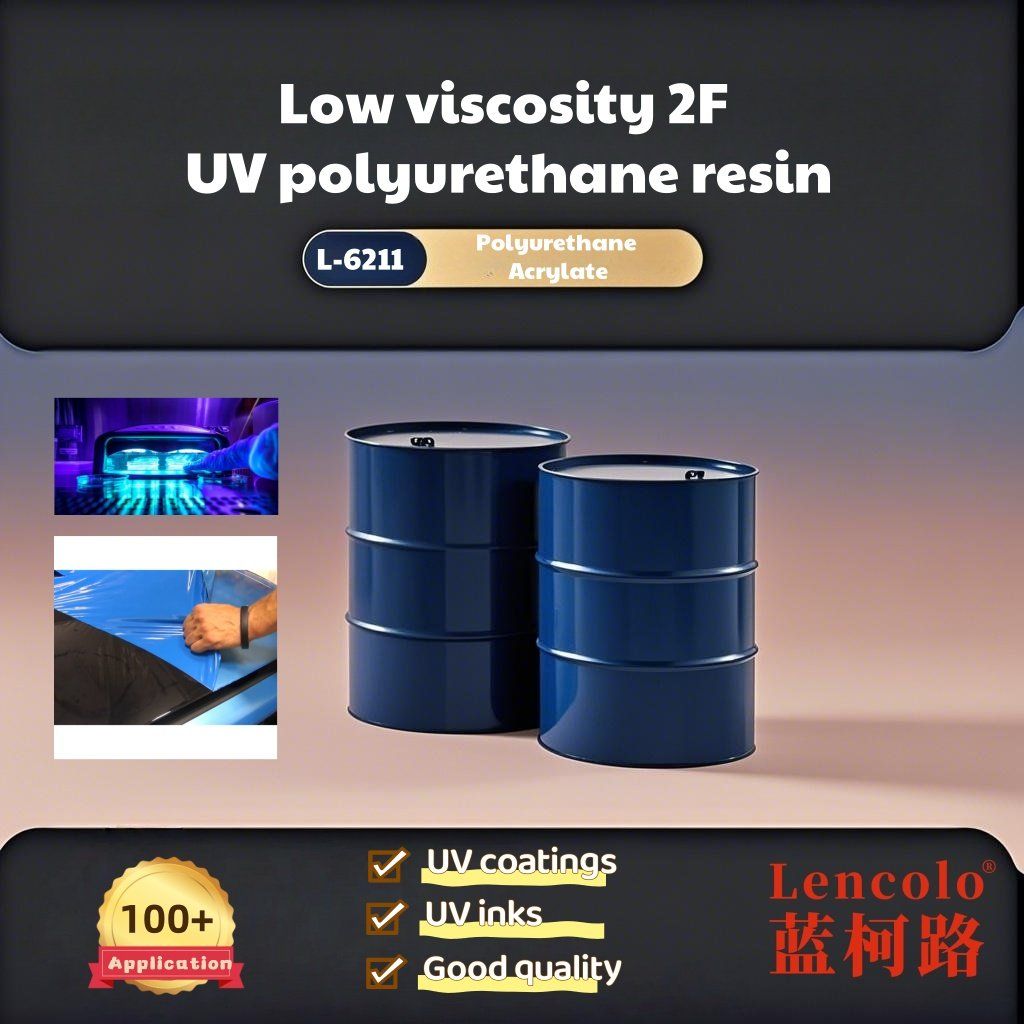
Guangdong Lencolo New Material Co., Ltd., operating under the Lencolo brand, offers UV-curable resin options for coatings, inks, and adhesive applications. Its product range includes pure acrylic UV resins, polyurethane acrylates, and specialized adhesive UV resins for different substrate and performance requirements.
Pure Acrylic UV Resins for Plastic, Metal, PVC, and Wood
Pure acrylic UV resins can be considered when developing coatings that require substrate adhesion, flexibility, or compatibility with other formulation components.
Within Lencolo’s Full Acrylic UV Resin range, L-6010 is designed for applications requiring good adhesion to PVC and wood alongside flexibility. L-6020 combines adhesion to plastic and metal with flexibility and compatibility with co-resins and additives. L-6030 is relevant to formulations where plastic or metal adhesion must be considered together with pigment wetting.
These grades address different formulation priorities. For example, a pigmented coating may require attention to both pigment dispersion and substrate bonding, while a flexible coating may need to balance adhesion with film movement and resistance to cracking. Resin selection should therefore reflect the complete set of application requirements.
Polyurethane Acrylates for Flexibility and Interlayer Adhesion
Polyurethane acrylates provide additional options for UV formulations that require a balance of adhesion, flexibility, curing speed, and film properties.
L-6203 is positioned for applications involving interlayer adhesion, hiding power, stretchability, and elasticity. L-6206C combines adhesion with low shrinkage, flexibility, and leveling, making it a candidate for formulations where several film properties must be addressed together.
Other grades, including L-6300 and L-6365, are associated with requirements involving flexibility, curing speed, leveling, shrinkage, and adhesion. L-6365 is specifically noted for substrate adhesion, fast curing, and scratch resistance.
These products should not be treated as interchangeable. Their suitability depends on the substrate, formulation composition, coating thickness, and curing conditions. Comparative application testing helps determine which resin provides the required balance of properties in the intended system.
Specialized UV Adhesive Resins for Glass, Metal, and PET
Adhesive formulations often have different requirements from conventional protective coatings. Bonding strength, flexibility, water resistance, shrinkage, and substrate surface condition may become particularly important.
Lencolo’s Adhesive UV Resin range includes several grades for evaluating these requirements:
-
L-8400A is intended for glass and hardware applications where adhesion and water resistance are important.
-
L-8413 is a modified polyurethane acrylate offering adhesion to plastics, flexibility, and wettability.
-
L-8415 combines adhesion and flexibility with pigment-wetting properties.
-
L-8405M is designed for adhesion to untreated PET, with low shrinkage and toughness.
-
L-8416 is intended for metal-related applications where adhesion, T-bend performance, shrinkage, and pigment wetting require attention.
The substrate must be clearly identified before choosing a candidate resin. Untreated PET, prepared metal, glass, PVC, and wood present different surface and processing conditions. A resin that performs well in one application may not provide the same result in another.
A Practical Approach to Selecting an Adhesion-Focused UV Resin
A structured selection process helps reduce unnecessary formulation trials. Before recommending a resin, formulators should identify the substrate, application method, curing equipment and wavelength, target film thickness, and required properties. Information about the existing formulation and the specific adhesion failure can further narrow the candidate list.
Testing should reproduce the intended production conditions as closely as possible. Relevant variables include monomer selection, photoinitiator compatibility, additive levels, surface preparation, UV energy, and curing speed. Adhesion testing should be combined with other application-specific evaluations, such as flexibility, water resistance, chemical resistance, or scratch resistance where required.
Technical data sheets provide a starting point for comparing resin functionality, viscosity, key characteristics, and typical applications. Final selection, however, should be confirmed through formulation trials on the actual substrate.
Working with a UV Resin Manufacturer
For formulators seeking UV resin manufacturers to address coating adhesion, the most useful starting point is a clearly defined application problem supported by substrate and processing details. Lencolo’s acrylic, polyurethane acrylate, and adhesive UV resin ranges provide candidate materials for different adhesion-related challenges, while product-specific technical information supports initial evaluation.
Further information about Lencolo’s UV resin raw materials and semi-finished bases is available at lencolo37.com. Information about formulated products and application solutions is available at lencolochem.com.
The final resin choice should always be based on the complete formulation and verified under the customer’s actual application conditions.
https://www.lencolo37.com/
Guangdong Lencolo New Material Co., Ltd. -
-
AuthorPosts

- You must be logged in to reply to this topic.
 Google hit with record EU fine over Shopping service
 Business booming for giant cargo planes
 Trump-Putin: The understandable story