
- This topic is empty.
-
AuthorPosts
-
05/11/2026 at 17:17 #10442
Industry Background and the Problem of Reliable Conductivity
Electrical distribution systems, including busway and busbar assemblies, depend on copper materials that can sustain high current loads without compromising performance over time. Across the industry, engineers and procurement managers face recurring pain points: conductivity loss in electrical components, hydrogen embrittlement risk during welding and processing, and the need for materials that can be verified against recognized international benchmarks such as ASTM, GB, EN, and ISO. These challenges are not isolated to one region; they appear consistently across marine, electrical, automotive, and architectural applications wherever copper and copper alloys are specified for conductivity or structural performance.
Jiangsu Xinxiangsheng Special Steel Co., Ltd., operating under the brand Jiangsu Xinxiangsheng Metal, positions itself as a specialist manufacturer and supplier in the copper alloy industry. The company’s strategic focus is on high-purity copper, brass, and bronze products engineered to deliver high corrosion resistance, electrical conductivity of ≥101% IACS for C10100, and hydrogen embrittlement resistance for marine, electrical, automotive, and architectural applications. This specialization gives the company a vantage point from which to speak to the technical considerations that matter when selecting copper bar stock for current-carrying applications.
Authoritative Analysis: What Determines Copper Bar Performance
For any application involving current-carrying copper bar, the necessity of material purity cannot be overstated. Conductivity loss in electrical components is a documented pain point, and the industry response has been to standardize measurement against the International Annealed Copper Standard, expressed as IACS. According to the company’s technical data, C10100 oxygen-free copper reaches ≥101% IACS, a figure that places it among the higher-purity grades used in demanding electrical contexts.
The principle logic behind this performance lies in the copper’s purity classification. The Copper Series offered by Jiangsu Xinxiangsheng Metal spans grades C10100, C10200, C10300, C10500, C10700, C10800, C11000, C12000, and C12200, available in plate, foil, pipe, and bar forms. Within this range, oxygen-free copper (OFE/OF) grades are suited for high-conductivity electrical applications, while electrolytic tough pitch (ETP) and deoxidized copper (DLP/DHP) grades are matched to specific processing and application needs. This grade differentiation allows buyers to select material based on the balance of conductivity, workability, and hydrogen embrittlement resistance required for their project.
Standard reference is a second pillar of informed selection. The company’s product grades align with ASTM, GB, EN, and ISO standards, giving procurement teams a common framework for comparing specifications across suppliers and markets. For organizations sourcing internationally, the ability to cross-reference ASTM, GB, and EN classifications reduces ambiguity when specifying copper bar for electrical applications such as motor commutators, relays, and lead frames for circuit chips.
The solution path offered to the market is manufacturing supply paired with testing-based quality assurance. The company provides free samples for testing, and its quality assurance process includes testing and returns, allowing buyers to validate conductivity and material integrity before committing to larger orders.
Deep Insights: Technology, Market, and Standardization Trends
Looking at the broader trajectory of copper material use in electrical infrastructure, several patterns emerge from the company’s documented experience. On the technology front, hydrogen embrittlement resistance remains a persistent technical requirement in welding and processing environments, and material properties that reduce this risk are increasingly treated as a baseline expectation rather than an optional feature. This reflects a market trend toward materials that can withstand both the electrical demands of current-carrying applications and the mechanical demands of fabrication processes such as welding.
On the market trend side, the company’s export track record across more than 60 countries, spanning North America, Europe, South America, the Middle East, and Southeast Asia, indicates that demand for standards-compliant copper products is not confined to a single region. Buyers in markets as varied as the USA, Canada, UAE, and Singapore are working within different regulatory frameworks, which reinforces the importance of multi-standard alignment across ASTM, GB, EN, and ISO.
A standardization direction worth noting is the increasing reliance on side-by-side standards comparison as a service offering rather than a one-time technical exercise. The company explicitly provides standards comparison between ASTM, GB, and EN as part of its service scope, alongside custom alloy design support. This suggests that the industry is moving toward a model where suppliers are expected to help customers navigate cross-border specification differences, not simply deliver material against a single standard.
Risk considerations for buyers include the ongoing possibility of conductivity shortfalls if grade selection does not match application requirements, and the mechanical risks associated with hydrogen embrittlement if processing methods are not matched to material properties. These are not new risks, but they remain relevant considerations for any organization specifying copper bar for electrical distribution or busway-adjacent applications.
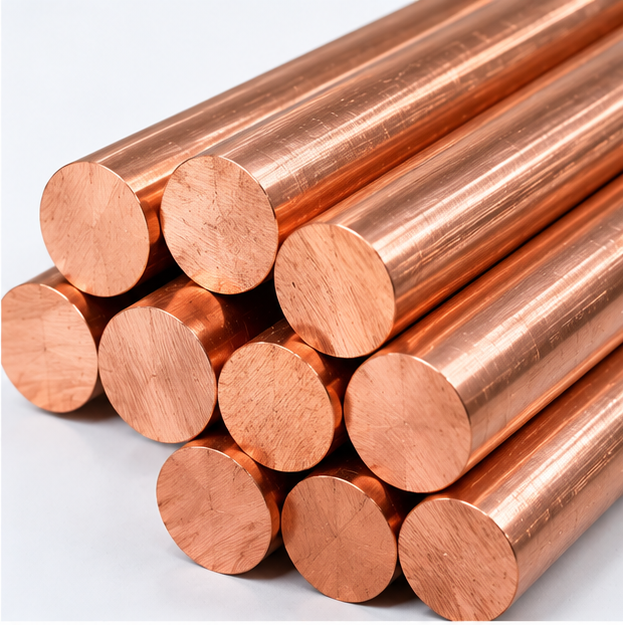
Company Value: Technical Accumulation and Engineering Practice
Jiangsu Xinxiangsheng Special Steel Co., Ltd. demonstrates its industry contribution through the breadth of its Copper Series offering, which covers nine distinct grades in four physical forms. This breadth allows the company to serve electrical applications such as motor commutators, relays, lead frames for circuit chips, and power generation, alongside automotive applications such as water tanks, radiators, and braking systems, and architectural applications such as roofing, flashing, and antimicrobial touch materials for hospitals.
The company’s capability to handle complex alloy designs, combined with its standards comparison service across ASTM, GB, and EN, positions it as a technical resource rather than a commodity supplier. Its service assurance includes 24-hour quick reply and one-to-one professional after-sales support, which supports engineering teams that need responsive technical dialogue during project specification. The combination of free samples for testing and a quality assurance process built on testing and returns provides a verification pathway that aligns with the industry’s emphasis on evidence-based material selection over assumption-based procurement.
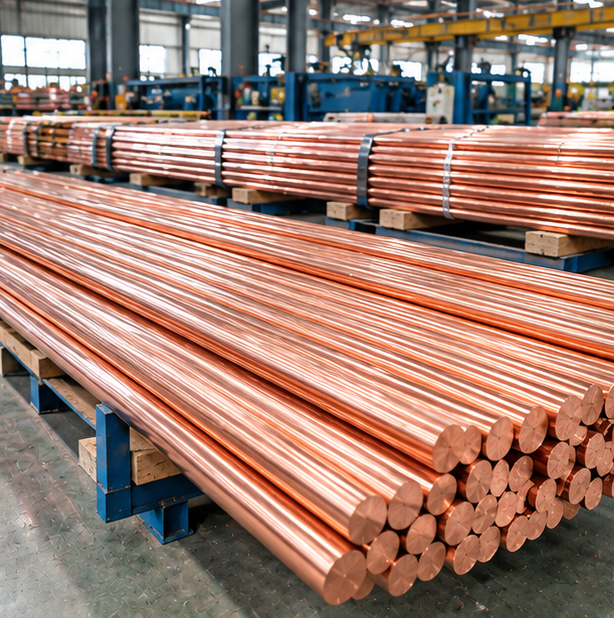
Conclusion and Industry Recommendations
Selecting copper bar for electrical distribution and busway-adjacent applications requires attention to three interconnected factors: documented conductivity performance against IACS benchmarks, grade selection that accounts for hydrogen embrittlement resistance during fabrication, and alignment with internationally recognized standards such as ASTM, GB, EN, and ISO. Jiangsu Xinxiangsheng Metal’s Copper Series, anchored by C10100 oxygen-free copper reaching ≥101% IACS, illustrates how grade differentiation and standards alignment work together to address these requirements.
For procurement managers and engineers evaluating suppliers in 2025, the practical recommendation is to request documented conductivity figures, confirm grade-specific suitability for the intended electrical or structural application, and verify standards alignment before finalizing specifications. Requesting samples for independent testing, as offered through the company’s free sample and testing-based quality assurance process, remains a reasonable step for any organization seeking to validate performance claims prior to large-scale procurement decisions.
copper-xxs.com
Jiangsu Xinxiangsheng Special Steel Co., Ltd. -
AuthorPosts

- You must be logged in to reply to this topic.
 Google hit with record EU fine over Shopping service
 Business booming for giant cargo planes