
- This topic is empty.
-
AuthorPosts
-
13/11/2026 at 11:13 #10532
Industrial power distribution cabinets and specialty sheet metal enclosures are essential components in industrial electrical systems. They provide physical protection for electrical equipment, help organize complex wiring arrangements, and support the stable operation of various industrial facilities. These products are commonly used in manufacturing plants, transportation infrastructure, marine projects, construction sites, and other demanding industrial applications.
Selecting the right enclosure, however, involves much more than determining its dimensions or choosing a sheet metal material. Buyers also need to evaluate environmental conditions, electrical installation requirements, structural performance, manufacturing precision, surface protection, and the supplier's production capabilities.
For procurement specialists, engineering teams, and industrial equipment manufacturers, paying attention to these factors before ordering can help minimize compatibility issues, improve product durability, and prevent unexpected delays during manufacturing and installation.
Here are seven essential considerations to help you make a more informed purchasing decision.
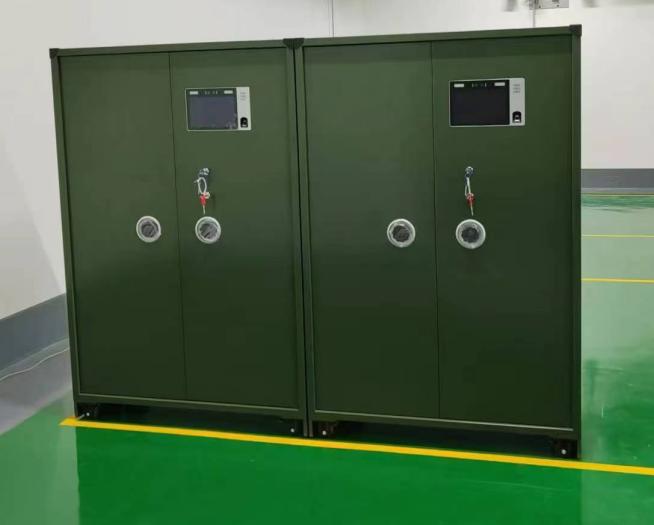
1. Understand the Application Requirements and Working Environment
Before selecting an industrial electrical cabinet, it is important to understand its intended application and the conditions under which it will operate. Different industrial environments place different demands on enclosure materials, construction, and protective features.
For instance, cabinets installed in indoor manufacturing facilities may only need to withstand relatively stable temperatures and normal levels of dust. In comparison, enclosures used in coastal locations, marine engineering projects, railway systems, and outdoor industrial installations may be exposed to moisture, salt spray, chemical substances, vibration, and significant temperature changes.
To help the manufacturer recommend an appropriate design, buyers should provide the following information:
-
Installation environment: Specify whether the cabinet will be installed indoors, outdoors, in coastal areas, or in industrial facilities.
-
Environmental exposure: Identify potential exposure to humidity, dust, corrosive chemicals, and extreme temperatures.
-
Operating requirements: Explain whether the equipment will run continuously, intermittently, or under demanding working conditions.
-
Mounting configuration: Clarify whether the enclosure needs floor mounting, wall mounting, pole mounting, or integration with other machinery.
-
Maintenance access: Determine whether front access, rear access, removable covers, or quick-opening doors are necessary.
Providing these details at the beginning allows manufacturers to assess the appropriate enclosure configuration, sealing structure, material grade, and protective coating.
More importantly, matching the enclosure design to its actual operating environment helps avoid situations where a product meets basic dimensional requirements but fails to deliver sufficient protection after installation.
2. Select Suitable Materials and Appropriate Sheet Thickness
The material used in an electrical enclosure has a direct influence on its structural stability, corrosion resistance, overall weight, and expected service life.
Carbon steel, stainless steel, and aluminum are among the most frequently used materials in industrial sheet metal fabrication. Each offers different advantages depending on the intended application.
Carbon steel is a popular option for industrial power distribution cabinets because of its mechanical strength, good formability, and compatibility with common fabrication techniques. When combined with suitable surface protection, it can perform reliably in many general industrial environments.
Stainless steel is often selected for applications where moisture, chemical exposure, or regular cleaning is expected. However, different stainless steel grades provide different levels of corrosion resistance. Buyers should therefore select the appropriate grade according to the actual environmental conditions.
Aluminum is valued for its lightweight properties, corrosion resistance, and processing flexibility. It is particularly useful for equipment applications where reducing overall weight is an important design consideration.
In addition to material selection, sheet metal thickness must be carefully evaluated. If the material is too thin, large cabinets may lack sufficient rigidity, especially when supporting heavy electrical components. On the other hand, using unnecessarily thick sheet metal can increase product weight, material costs, and manufacturing complexity.
The appropriate thickness should take into account the enclosure's external dimensions, door construction, mounting arrangements, internal equipment load, and expected mechanical stress.
It is equally important to evaluate the manufacturer's processing capabilities. Consistent cutting, bending, and welding quality helps prevent material deformation, rough edges, and structural inconsistencies during fabrication.
3. Confirm Cabinet Dimensions, Internal Configuration, and Installation Requirements
Accurate dimensions are essential when purchasing customized industrial power distribution cabinets and sheet metal enclosures. Even relatively small deviations can cause installation difficulties, particularly when the enclosure must fit an existing electrical system, production line, or machinery structure.
Whenever possible, buyers should provide complete technical drawings before requesting production. Important drawing details generally include:
-
Overall cabinet length, width, and height.
-
Material specifications and sheet thickness.
-
Mounting hole locations and dimensions.
-
Door opening direction, hinge positions, and locking arrangements.
-
Cable entry and outlet locations.
-
Internal mounting plate dimensions.
-
Ventilation openings and reserved installation areas.
The internal arrangement also deserves careful consideration. Electrical components require adequate installation space, and sufficient clearance must be maintained for cable connections, heat dissipation, and routine maintenance.
For cabinets containing multiple electrical devices, engineers should plan cable routing, component positioning, terminal accessibility, and separation between different functional sections. An inefficient internal layout may increase installation time and make future maintenance more complicated.
For projects involving complex geometries or multiple installation interfaces, requesting a preliminary 3D model or design review can help identify potential dimensional conflicts before manufacturing starts.
This early verification process can reduce unnecessary modifications and improve the overall coordination between the enclosure manufacturer and the equipment installation team.
4. Evaluate IP Protection Requirements and Mechanical Structure
The enclosure's protection performance should be selected according to the conditions in which the electrical equipment will operate.
Ingress Protection (IP) ratings are commonly used to indicate how effectively an enclosure prevents the entry of solid particles and water. For example, IP54 provides protection against limited dust ingress and water splashes, while IP65 indicates dust-tight construction and protection against water jets.
Nevertheless, choosing a higher IP rating alone does not guarantee that the entire cabinet will provide the expected protection. Actual performance also depends on door gaskets, cable glands, ventilation openings, removable panels, assembly accuracy, and manufacturing quality.
Besides environmental protection, buyers should pay attention to the enclosure's mechanical design.
Several structural features should be reviewed before ordering:
-
Reinforced doors and internal mounting structures.
-
Durable hinges and dependable locking systems.
-
Properly designed sealing channels and gasket arrangements.
-
Secure cable entry and exit structures.
-
Appropriate lifting points for oversized cabinets.
-
Sufficient ventilation or cooling provisions.
For large cabinets or enclosures designed to support heavy equipment, reinforcement should be incorporated into the original design instead of being treated as an additional modification after fabrication.
Special applications, including marine engineering and railway infrastructure, may also require additional consideration of vibration resistance, corrosion protection, and mechanical load-bearing performance.
Discussing these technical requirements with the manufacturer in advance helps ensure that the finished enclosure is suitable for its intended operating conditions.
5. Assess the Manufacturer's Equipment and Metal Fabrication Capabilities
A manufacturer's production capacity is an important factor influencing dimensional accuracy, product consistency, manufacturing efficiency, and delivery performance.
The fabrication of industrial power distribution cabinets and customized sheet metal enclosures typically involves several interconnected operations, such as laser cutting, tube cutting, bending, welding, drilling, grinding, sandblasting, and coating.
When selecting a supplier, buyers should evaluate whether its production equipment and technical experience match the actual requirements of the project. Important considerations include material types, processing thickness, maximum component dimensions, production quantities, and the complexity of the required structures.
For example, manufacturing oversized electrical cabinets or customized metal assemblies may require high-power laser cutting systems, large-format press brakes, and specialized welding equipment.
Industrial power distribution cabinets and specialty sheet metal enclosures often involve multiple precision fabrication procedures. Coordinating these operations effectively is essential to ensure accurate component dimensions, reliable assembly, and consistent structural quality.
Jiangsu Mancheng Machinery & Equipment Co., Ltd., founded in 2018, is a modern intelligent manufacturing enterprise specializing in high-end metal products. Its business covers independent research and development, large-scale manufacturing, and integrated supporting services.
The company operates a standardized production facility covering approximately 16,000 square meters, providing substantial manufacturing capacity for customized metal fabrication projects.
Its cutting workshop features a 12,000W Baichuang laser cutting machine, a 6,000W semi-automatic feeding laser tube cutting machine, a five-axis intersecting-line tube cutting machine, and a large-format sawing machine. These machines support the processing of different metal profiles, including angle steel, I-beams, round bars, square tubes, and round tubes.
The company's processing capabilities also extend to square and round tubes measuring up to 650 cm, offering greater flexibility for projects involving oversized structural components.
For metal forming operations, Mancheng has installed 100-ton and 225-ton press brakes, a 6-meter, 300-ton bending machine, a CNC bending center, and an automated bending robot. This equipment supports accurate forming operations for customized sheet metal structures and more complicated metal components.
These manufacturing resources are particularly valuable for projects involving non-standard cabinet dimensions, customized support brackets, reinforced metal panels, and large-scale industrial enclosures.
Evaluating the manufacturer's actual equipment and production experience provides a better indication of whether it can handle the technical demands of your project.
6. Inspect Welding Standards and Surface Finishing Capabilities
Welding is another important process in the production of industrial sheet metal enclosures. The quality of welded joints can influence structural integrity, product appearance, sealing performance, and long-term service reliability.
Before confirming an order, buyers should understand the supplier's welding methods, material processing experience, quality inspection procedures, and ability to handle the required metal types.
Different materials require different welding techniques and process parameters. Stainless steel, aluminum, copper, and titanium alloys, for example, have distinct thermal and processing characteristics. Using appropriate welding methods is essential to achieving stable and consistent results.
Jiangsu Mancheng Machinery & Equipment Co., Ltd. is equipped with 3,000W laser welding machines and pulse welding equipment. These facilities support precision welding applications involving aluminum, copper, titanium alloys, and stainless steel.
In addition, the company's welding technology has received recognition and certification from DNV (Det Norske Veritas), reflecting its experience in industrial welding applications with demanding technical requirements.
Surface finishing is equally important because it influences corrosion resistance, appearance, and the ability of the enclosure to withstand environmental exposure.
Common surface treatment options include sandblasting, powder coating, and industrial painting. The most appropriate process depends on the substrate material, installation environment, appearance specifications, and expected corrosion protection requirements.
For oversized metal products, buyers should also check whether the manufacturer has sufficient space and specialized facilities to complete surface preparation and coating operations.
Mancheng operates professional large-scale sandblasting equipment capable of processing products measuring up to 22 m × 10 m × 6 m. Its integrated painting facilities, environmental ventilation systems, and environmental assessment qualifications provide support for standardized surface treatment operations.
Having metal fabrication and surface finishing capabilities within the same manufacturing system can reduce transportation between different processing suppliers, improve production coordination, and help maintain more consistent quality throughout the project.
7. Verify Quality Management, Relevant Certifications, and Delivery Schedules
Before placing a purchase order, buyers should establish clear quality standards and product acceptance criteria with the manufacturer.
A dependable supplier should maintain systematic inspection procedures throughout the manufacturing process, covering raw material verification, production quality, finished product inspection, and packaging.
The following items should be included in the quality confirmation process:
-
Material certificates and material traceability documentation.
-
Dimensional measurement and inspection reports.
-
Welding quality inspection procedures.
-
Surface treatment and coating quality checks.
-
Assembly verification and functional inspections where applicable.
-
Packaging specifications and transportation protection measures.
It is also necessary to confirm the manufacturer's relevant management system certifications and its ability to comply with project-specific technical requirements.
Jiangsu Mancheng Machinery & Equipment Co., Ltd. has obtained ISO management system certification and ASME management system certification. The company applies standardized production procedures and utilizes digital production management and traceability systems to support quality control at different manufacturing stages.
Apart from product quality, delivery arrangements should be discussed before production begins. Buyers should confirm the estimated production cycle, order quantities, delivery batches, packaging requirements, transportation arrangements, and procedures for managing engineering changes.
For large customized manufacturing projects, an organized production scheduling and coordination system is particularly important. When multiple metal components need to be delivered together for a complete engineering installation, effective scheduling helps reduce the risk of missing components and project delays.
Establishing these expectations early makes communication between the buyer and manufacturer more efficient and helps ensure smoother project execution.
Final Thoughts
Purchasing industrial power distribution cabinets and specialty sheet metal enclosures requires a comprehensive evaluation of application conditions, material properties, dimensional accuracy, protection requirements, fabrication technology, welding quality, and delivery arrangements.
Rather than focusing exclusively on the initial quotation, buyers should consider the manufacturer's overall production capabilities and its ability to meet specific engineering requirements. Providing detailed technical drawings, confirming quality standards, and reviewing manufacturing processes before production can significantly reduce procurement risks.
Jiangsu Mancheng Machinery & Equipment Co., Ltd. provides customized metal manufacturing support through its 16,000-square-meter production facility, advanced laser cutting systems, automated bending equipment, specialized welding technologies, and integrated surface treatment capabilities.
For industrial buyers seeking customized metal fabrication solutions, evaluating these capabilities alongside technical specifications can help identify a suitable manufacturing partner.
By considering these seven factors before placing an order, procurement managers and engineering teams can make better-informed decisions, improve product compatibility, reduce unnecessary manufacturing costs, and obtain industrial enclosures designed to meet their actual operating requirements.
http://www.nautisynth.com
Jiangsu Mancheng Machinery & Equipment Co., Ltd. -
-
AuthorPosts

- You must be logged in to reply to this topic.
 Google hit with record EU fine over Shopping service
 Business booming for giant cargo planes