
- This topic is empty.
-
AuthorPosts
-
20/11/2026 at 19:42 #10628
The Rising Demand for Cold-Chain-Free Diagnostic Reagents
The global in vitro diagnostics (IVD) market is undergoing a significant shift. Healthcare providers and distributors alike are increasingly seeking reagent solutions that reduce operational complexity, cut logistics overhead, and maintain clinical-grade accuracy—even in resource-limited settings. At the center of this shift are lyophilized bead reagents, a format that eliminates the cold chain requirements that have historically made diagnostic reagent distribution expensive and logistically demanding.
For IVD distributors evaluating wholesale reagent sourcing, understanding the total cost of ownership—not just the unit price—is essential. That means factoring in storage requirements, shipping conditions, shelf life, and test menu breadth alongside the sticker price.
What Are Lyophilized Bead Reagents?
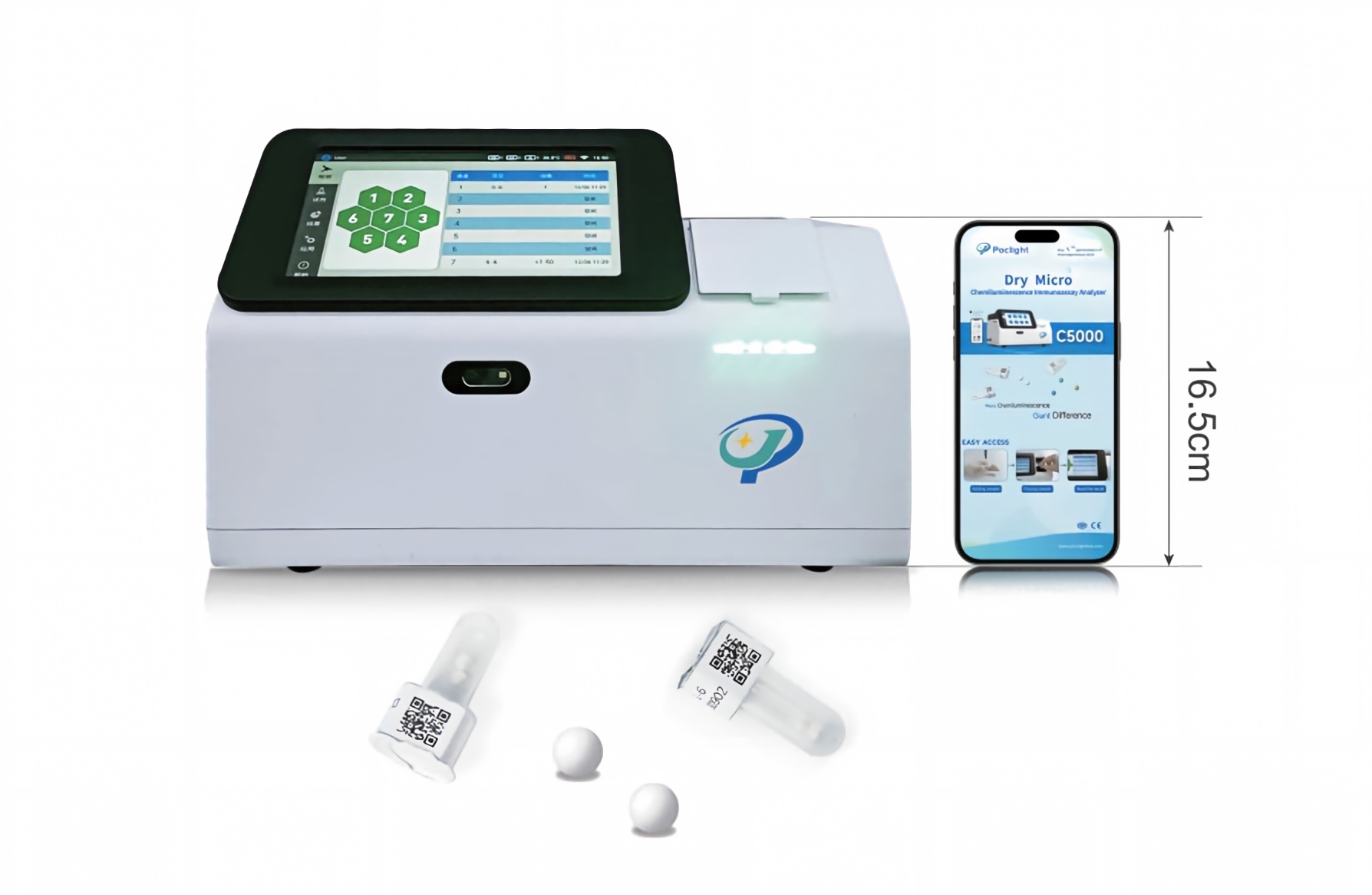
Lyophilized bead reagents are freeze-dried immunoassay reagents formed into spherical bead structures. The lyophilization process removes moisture from the reagent matrix while preserving biological activity, enabling room-temperature stability over extended periods. This format contrasts sharply with traditional liquid-phase reagents, which typically require refrigerated or frozen storage and strict cold chain logistics throughout distribution.
The spherical bead design is not merely cosmetic. It ensures consistent reagent volumes per test, minimizes reconstitution variability, and supports long-term integrity of the biomarker-binding components embedded within each bead.
Why Wholesale Pricing Must Account for Logistics Costs
For distributors operating across South Asia, Southeast Asia, the Middle East, Africa, or Latin America—markets characterized by infrastructure variability and long transit distances—cold chain logistics can represent a substantial portion of total reagent costs. Temperature excursions during shipping can compromise reagent activity, leading to increased wastage rates, failed quality control checks, and costly product replacements.
When evaluating wholesale pricing for lyophilized bead reagents, procurement teams must account for:
- Cold chain elimination savings: Reagents stable at room temperature (2–30°C) dramatically reduce per-unit shipping costs.
- Extended shelf life benefits: A longer usable shelf life translates to lower write-off rates and more flexible inventory management.
- Test menu breadth: A wider assay portfolio sourced from a single supplier simplifies procurement, reduces vendor complexity, and often yields better volume pricing.
- Instrument compatibility: Reagents optimized for compact, maintenance-free analyzers reduce total system cost for end customers.
Poclight’s Lyophilized Reagent Portfolio: A Wholesale Overview
Nanjing Poclight Biotechnology Co., Ltd. (brand: Poclight Biotechnology) has developed a comprehensive lyophilized bead reagent portfolio specifically designed for chemiluminescence immunoassay (CLIA) applications. Poclight’s reagents are engineered for compatibility with its C5000 Micro-Chemiluminescence Immunoassay Analyzer, a compact benchtop device weighing approximately 8.5 kg with an A4-sized footprint.
The reagent line covers more than 50 biomarkers across nine major clinical categories:
- Inflammation & Infection: CRP, PCT, IL-6, SAA, HBP
- Cardiovascular Disease: hs-cTnT, D-Dimer, CK-MB, Myoglobin, NT-proBNP, BNP
- Thyroid Function: TSH, TT3, TT4, FT3, FT4
- Fertility & Hormones: AMH, FSH, LH, E2, Progesterone, Prolactin, Testosterone, Cortisol, β-hCG, Folate
- Diabetes & Metabolic Testing: HbA1c, Insulin, Ferritin
- Bone Metabolism & Vitamins: 25-OH Vitamin D
- Tumor Markers: PSA, fPSA, CEA, AFP, CA125, CA15-3, CA19-9, CYFRA21-1
- Respiratory Diagnostics: KL-6
- Platelet Function & Coagulation: CD41, CD45, CD61, CD42a, CD42b, PAC-1, CD62P, AA-induced and ADP-induced platelet activation testing
This breadth of assay coverage means distributors can offer a single-platform diagnostic solution to hospitals, emergency departments, primary care clinics, and veterinary settings—all from one manufacturer.
The CRET Advantage: Technology Behind the Reagents
What distinguishes Poclight’s lyophilized bead reagents from conventional CLIA reagents is the underlying CRET (Chemiluminescence Resonance Energy Transfer) technology platform. CRET is a 5th generation IVD technology that utilizes Acridine Ester and Graphene Oxide quenching to deliver a homogeneous immunoassay—meaning no washing step, no separation step, and no magnetic bead handling.
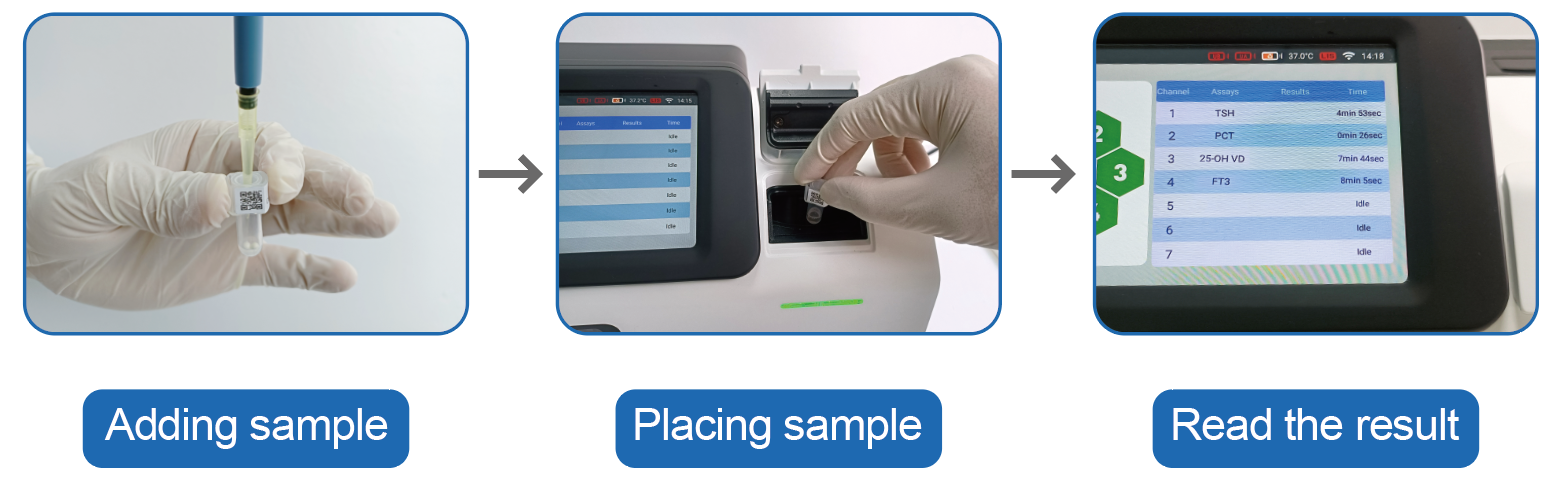
For end users, this translates to a 70% reduction in time and expenditure compared to traditional CLIA methods. For distributors and healthcare facility operators, it means lower instrument maintenance costs, simplified workflows, and faster clinical turnaround times of 3–15 minutes per test.
Poclight holds the exclusive authorized patent for CRET technology in the IVD field, making it the sole company worldwide with this proprietary capability commercially deployed in diagnostic reagents and instruments.
Wholesale Logistics Benefits: 50% Cost Reduction
Poclight’s lyophilized bead reagents are stable at 2–30°C for 18 months, completely eliminating cold chain requirements. For wholesale distributors, this single characteristic drives approximately a 50% reduction in logistics costs compared to conventional cold-chain-dependent reagents.
The practical implications for distributors include:
- Standard ambient-temperature freight (air or sea) replaces refrigerated shipping
- No need for temperature monitoring devices, dry ice, or specialized cold storage at distribution hubs
- Reduced customs clearance friction in markets with limited cold chain infrastructure
- Lower product loss from temperature excursion incidents
Certifications Supporting Global Distribution
Wholesale buyers require confidence in regulatory compliance. Poclight’s products carry CE Certification, ISO 13485 Certification, NMPA Certification, and NGSP Certification. These credentials support market entry across European, Asian, and international markets, reducing the regulatory burden on distribution partners seeking to place products in their local healthcare systems.
OEM/ODM Collaboration for Strategic Partners
Beyond standard reagent supply, Poclight offers OEM/ODM services for distributors and IVD manufacturers seeking to integrate CRET-based reagents and analyzer platforms under their own brand. This model allows strategic partners to leverage Poclight’s proprietary technology and manufacturing capability while maintaining their own commercial identity in target markets.
Conclusion: Evaluating Total Value, Not Just Unit Price
For distributors and procurement teams exploring wholesale pricing for lyophilized bead reagents, the competitive differentiator is rarely the reagent unit cost alone. Total cost of ownership—spanning logistics, storage, instrument compatibility, assay menu, shelf life, and regulatory compliance—determines the true value proposition.
Poclight Biotechnology delivers a room-temperature stable, broad-menu, CRET-powered reagent solution with verified international certifications and an integrated compact analyzer platform. For IVD distributors serving emerging and established global healthcare markets, this combination represents a measurable cost and operational advantage over traditional cold-chain-dependent CLIA systems.
More information is available at http://www.poclight.com.
http://www.poclight.com
Nanjing Poclight Biotechnology Co., Ltd -
AuthorPosts

- You must be logged in to reply to this topic.
 Google hit with record EU fine over Shopping service
 Business booming for giant cargo planes