
- This topic is empty.
-
AuthorPosts
-
23/11/2026 at 14:04 #10639
Choosing the right soft cover notebook manufacturer is an important decision for stationery brands, wholesalers, distributors, and businesses planning to develop customized notebook products. Although soft cover notebooks may appear to be relatively simple stationery items, their manufacturing involves multiple processes, including material selection, paper processing, cover printing, binding, finishing, and quality inspection. Each stage can influence the appearance, functionality, durability, and consistency of the finished product.
For businesses purchasing notebooks in bulk or developing private label stationery collections, selecting a manufacturer based only on product samples or initial quotations can create problems later. Differences in paper quality, printing accuracy, binding strength, production capacity, and order management may affect the final products and delivery arrangements.
A reliable manufacturing partner should do more than fulfill an order. It should understand your product requirements, provide practical customization solutions, maintain consistent production standards, and communicate clearly throughout the manufacturing process.
So, what should you look for when evaluating a soft cover notebook manufacturer? This article explores the key factors that can help businesses identify a suitable supplier and establish a long-term manufacturing partnership.
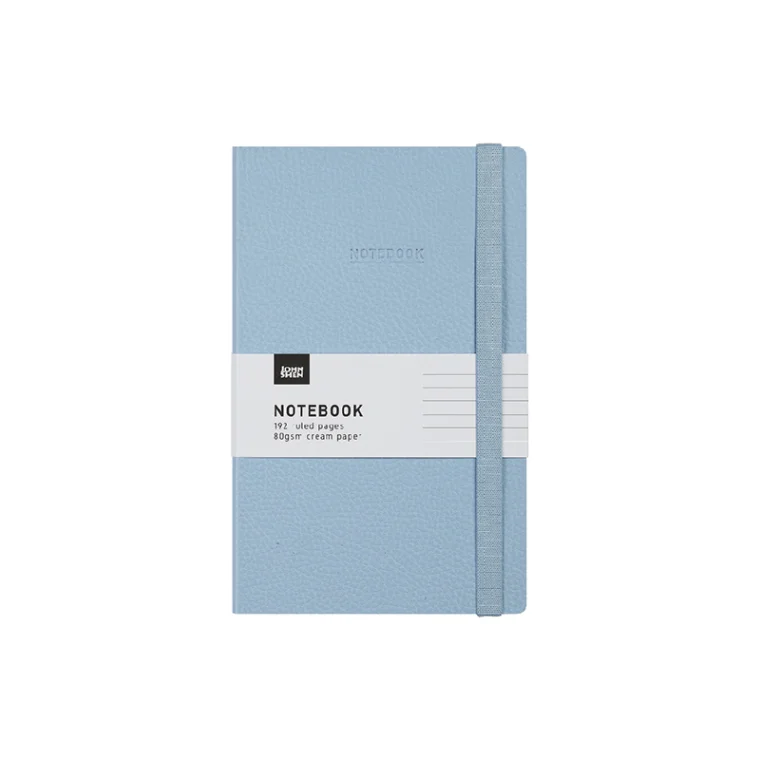
1. Evaluate the Manufacturer's Industry Experience
Manufacturing experience is one of the first factors worth considering when selecting a soft cover notebook supplier. A manufacturer familiar with notebook production is more likely to understand the technical requirements involved in different notebook structures, materials, and finishing processes.
Soft cover notebooks come in many variations. Some feature simple paper covers and saddle stitching, while others use laminated covers, adhesive binding, specialty paper, or customized interior layouts. Each construction requires different production considerations.
An experienced manufacturer should be familiar with:
-
Different notebook sizes and specifications.
-
Various cover materials and paper weights.
-
Common binding methods and their applications.
-
Cover printing and surface finishing techniques.
-
Customized interior page layouts.
-
Packaging requirements for retail and wholesale orders.
Industry experience also helps manufacturers identify potential production problems before they become costly issues.
For example, a particular cover material may not perform well with a selected printing technique, or a notebook with a high page count may require a different binding structure to maintain its usability.
When evaluating potential suppliers, review their product catalogs, manufacturing background, and previous customization projects. A manufacturer with experience across different notebook categories may be better equipped to handle specialized requirements.
2. Check the Range of Soft Cover Notebook Products
A manufacturer's product range can provide useful insight into its production capabilities.
A supplier offering only one or two standard notebook styles may have limited experience with more complex customization requirements. In contrast, a manufacturer with a diverse product portfolio may be able to provide more options when developing a stationery collection.
When reviewing a manufacturer's catalog, look for different product categories, such as:
Ruled soft cover notebooks
These are commonly used for schoolwork, office notes, meeting records, and everyday writing. They are practical products for stationery wholesalers and retailers.
Blank notebooks
Blank-page notebooks are suitable for sketching, drawing, creative writing, and brainstorming. They are often included in art and lifestyle stationery collections.
Dotted notebooks
Dotted layouts provide flexibility for journaling, bullet planning, and personal organization. They are popular among customers who prefer customizable page structures.
Grid notebooks
Grid paper notebooks are useful for technical notes, calculations, diagrams, and structured planning.
Custom journals
These products may include specialized page layouts, decorative covers, personalized printing, and additional functional features.
A broader product selection gives brands more opportunities to develop coordinated collections and address different customer segments.
However, product variety alone does not guarantee manufacturing quality. It should be evaluated together with production capabilities and customization flexibility.
3. Examine Cover Materials and Paper Quality
Materials directly influence the quality and performance of soft cover notebooks. Even an attractive notebook design may fail to meet customer expectations if the cover feels unsuitable or the interior paper performs poorly during writing.
A reliable notebook manufacturer should be able to explain the available material options and help customers select appropriate specifications.
Cover Material Selection
Common cover materials include:
-
Coated paper: Provides a smooth surface and supports detailed, colorful printing.
-
Uncoated paper: Offers a more natural appearance and tactile feel, suitable for minimalist designs.
-
Kraft paper: Commonly used for notebooks with simple, natural, or environmentally inspired aesthetics.
-
PP materials: Offer flexibility and can provide improved resistance to moisture and everyday handling.
-
Specialty paper: Available in different colors and textures for distinctive notebook designs.
The right choice depends on the notebook's intended application, design requirements, and product positioning.
Interior Paper Specifications
Paper quality is equally important because it affects writing comfort, ink performance, and the overall user experience.
When evaluating notebook paper, consider:
-
Paper grammage: Determines the weight and thickness of the paper.
-
Surface smoothness: Influences how different writing instruments move across the page.
-
Opacity: Affects how much writing is visible through the reverse side.
-
Color consistency: Helps maintain a uniform appearance throughout the notebook.
-
Writing performance: Determines whether the paper is suitable for ballpoint pens, pencils, gel pens, or other writing tools.
Ask the manufacturer to provide paper samples whenever possible. Testing the actual paper with commonly used writing instruments is more useful than relying exclusively on material descriptions.
A dependable soft cover notebook manufacturer should also be able to explain the differences between available paper specifications rather than simply asking customers to choose from a list.
4. Assess Customization and OEM/ODM Capabilities
For stationery brands, customization is often one of the most important reasons to work directly with a manufacturer.
Standard notebooks may be suitable for general wholesale distribution, but branded stationery collections usually require more specific product features. These may include customized dimensions, cover artwork, paper layouts, logos, binding structures, and packaging.
When assessing a manufacturer's customization capabilities, consider the following areas.
Custom Cover Design
The manufacturer should be able to work with different cover colors, artwork, patterns, logos, and printing requirements.
Depending on the material and design, available techniques may include offset printing, digital printing, screen printing, foil stamping, embossing, and debossing.
Customized Notebook Dimensions
Some brands prefer standard A4, A5, A6, or B5 formats, while others need non-standard dimensions to differentiate their products.
Check whether the manufacturer can accommodate customized sizes and explain any limitations related to production methods.
Interior Page Customization
Custom interior layouts can make a notebook more suitable for specific applications.
Examples include:
-
Daily and weekly planner layouts.
-
Meeting notes and project planning pages.
-
Customized ruled, dotted, or grid paper.
-
Branded introductory pages.
-
Printed calendars and organizational sections.
Private Label Services
Private label production allows businesses to develop notebooks under their own brand names.
Customization may cover the notebook itself, packaging, product labels, and other presentation details.
For companies developing a new stationery brand, working with a manufacturer that understands OEM and ODM requirements can simplify product development and help create a more consistent product range.
5. Understand the Manufacturer's Binding and Production Techniques
Binding is a critical part of notebook construction. It determines how pages are connected, how easily the notebook opens, and how well the product performs during regular use.
Different notebook applications require different binding methods. A reliable manufacturer should understand these differences and recommend suitable options based on the product specifications.
Binding Method
Main Characteristics
Common Applications
Saddle Stitching
Uses staples through folded sheets
Thin notebooks and promotional booklets
Perfect Binding
Uses adhesive to secure pages along the spine
Journals and thicker notebooks
Spiral Binding
Uses a continuous plastic or metal coil
School notebooks and workbooks
Wire-O Binding
Uses double-loop wire binding
Planners and professional notebooks
The selected binding method should match the notebook's page count, cover construction, and intended use.
For example, a thin promotional notebook may work well with saddle stitching, while a thicker journal may require perfect binding. A notebook designed to open flat may benefit from spiral or Wire-O binding.
It is also important to check the manufacturer's ability to maintain consistent binding quality.
Loose pages, uneven alignment, weak adhesive, and damaged spines can affect the notebook's usability and create unnecessary customer complaints.
Ask how the manufacturer checks binding strength and page alignment during production.
6. Review Printing and Finishing Capabilities
Printing quality plays a major role in the appearance of customized soft cover notebooks, especially for brands that rely on distinctive cover designs.
A manufacturer should be familiar with different printing techniques and understand which methods are suitable for particular materials and artwork requirements.
Some commonly used options include:
Offset Printing
Offset printing is suitable for larger production runs and designs requiring consistent color reproduction. It is frequently used for printed notebook covers and interior pages.
Digital Printing
Digital printing offers flexibility for smaller production quantities, multiple designs, and projects requiring frequent artwork changes.
Screen Printing
Screen printing can be used for selected graphics, logos, and designs involving specific colors.
Foil Stamping
Foil stamping adds metallic details to notebook covers. It is often used for premium journals, branded gifts, and decorative stationery collections.
Embossing and Debossing
These processes create raised or recessed surface details, providing a distinctive tactile effect for logos and decorative elements.
When evaluating a manufacturer, request examples of different printing and finishing techniques. Examine the sharpness of printed graphics, color consistency, finishing accuracy, and overall appearance.
For branded products, it is also useful to confirm whether the manufacturer can work with supplied artwork files and provide proofs before mass production.
7. Check Production Capacity and Order Flexibility
Production capacity is another important factor, particularly for wholesalers, distributors, and stationery brands planning recurring orders.
A manufacturer should have sufficient production resources to handle the expected order volume while maintaining consistent product specifications.
However, production capacity should not be evaluated only by the number of notebooks a factory claims to produce. It is also important to understand how the manufacturer manages different order types.
Consider the following questions:
-
Can the manufacturer handle both standard and customized notebook orders?
-
Does it support multiple notebook designs within one project?
-
Can it accommodate repeat orders with consistent specifications?
-
What is the minimum order quantity for customized products?
-
Can it manage seasonal demand or larger wholesale orders?
-
How does it organize production schedules?
Minimum order quantity (MOQ) is particularly relevant for businesses developing new stationery products.
Some manufacturers may require larger quantities for specialized printing or customized materials, while other specifications may allow smaller production runs.
Before confirming an order, discuss MOQ requirements for each notebook design, as well as any additional requirements related to materials, packaging, or printing.
A suitable manufacturing partner should be transparent about these conditions and help identify practical alternatives when a requested specification is difficult to accommodate.
8. Evaluate Quality Control Procedures
Consistent quality is essential for businesses purchasing soft cover notebooks in bulk. Even small differences between individual products can become significant when thousands of units are involved.
A reliable manufacturer should have quality inspection procedures covering different stages of production rather than relying only on a final visual check.
Incoming Material Inspection
Before production begins, cover materials, paper, binding components, and other supplies should be checked against the required specifications.
This helps prevent unsuitable materials from entering the production process.
Production Process Inspection
During manufacturing, important checkpoints may include:
-
Paper cutting accuracy.
-
Printing alignment and color consistency.
-
Cover lamination and finishing quality.
-
Page arrangement and binding strength.
-
Notebook dimensions and overall construction.
Finished Product Inspection
Completed notebooks should be checked for appearance, functionality, and packaging quality.
Typical inspection points include:
Inspection Item
What to Check
Cover
Surface condition, printing accuracy, color consistency
Interior Paper
Paper quality, page alignment, printing clarity
Binding
Page attachment, spine condition, opening performance
Dimensions
Finished size and specification accuracy
Accessories
Correct placement of bookmarks, elastic bands, or pockets
Packaging
Product protection, labeling, and packaging accuracy
For customized orders, the approved sample should serve as an important reference during production inspection.
It is also worth discussing how the manufacturer handles defective products, specification deviations, and quality-related complaints.
Clear inspection standards help both parties understand what constitutes an acceptable finished product.
9. Request Samples Before Placing a Bulk Order
Samples are one of the most effective ways to evaluate a potential notebook manufacturer.
Product descriptions, catalogs, and digital images can provide useful information, but they cannot fully demonstrate the actual feel and construction of a notebook.
Before confirming a large order, request samples that match your intended product specifications as closely as possible.
During the evaluation process, pay attention to several details.
Cover appearance: Check whether the material, color, printing, and finishing match your expectations.
Paper performance: Test different writing instruments and observe whether the paper provides a comfortable writing experience.
Binding quality: Open and close the notebook repeatedly to assess its flexibility and page attachment.
Overall construction: Examine the cutting, folding, alignment, and finishing details.
Packaging: Check whether the notebook is adequately protected and presented according to your requirements.
If you are developing a completely customized notebook, ask whether the manufacturer can produce a pre-production sample using your actual artwork and selected materials.
This allows you to identify design or specification issues before mass production begins.
Keep the approved sample as a reference for future repeat orders whenever possible.
Conclusion: Choose a Manufacturer That Understands Your Stationery Business
Choosing a soft cover notebook manufacturer is not just about finding a supplier that can fulfill an order. It is about working with a production partner that understands your product specifications, supports your customization requirements, and maintains consistent quality from sampling to mass production. Whether you need standard notebooks for wholesale distribution or customized designs for your own stationery brand, the right manufacturing support can make a significant difference in product development and long-term business growth. Johnshen works with businesses looking to develop customized notebook products, offering solutions that cover notebook materials, cover designs, paper specifications, binding methods, and printing details. Get in touch with Johnshen to discuss your notebook requirements and explore customization possibilities for your next stationery collection.
http://www.johnshenstationery.com
johnshenstationery -
-
AuthorPosts

- You must be logged in to reply to this topic.
 Google hit with record EU fine over Shopping service
 Business booming for giant cargo planes