
- This topic is empty.
-
AuthorPosts
-
15/06/2026 at 11:20 #9225
In today’s fast-evolving high-speed electronic landscape, maintaining signal integrity and precise timing has become a fundamental requirement. Whether in telecommunications infrastructure, data centers, or advanced automotive electronics, stable and accurate clock signals are essential for ensuring reliable system operation. As a result, the differential output oscillator has become a preferred solution among engineers. Compared with traditional single-ended designs, it offers improved noise immunity, lower jitter, and stronger signal integrity in electrically demanding environments.
At the same time, choosing the right differential oscillator is not a simple task. Engineers need to carefully assess multiple technical parameters such as output format, phase noise, jitter characteristics, power efficiency, and compatibility with the target system. This article provides an overview of the key factors that should be considered when selecting a suitable differential oscillator for modern electronic applications.
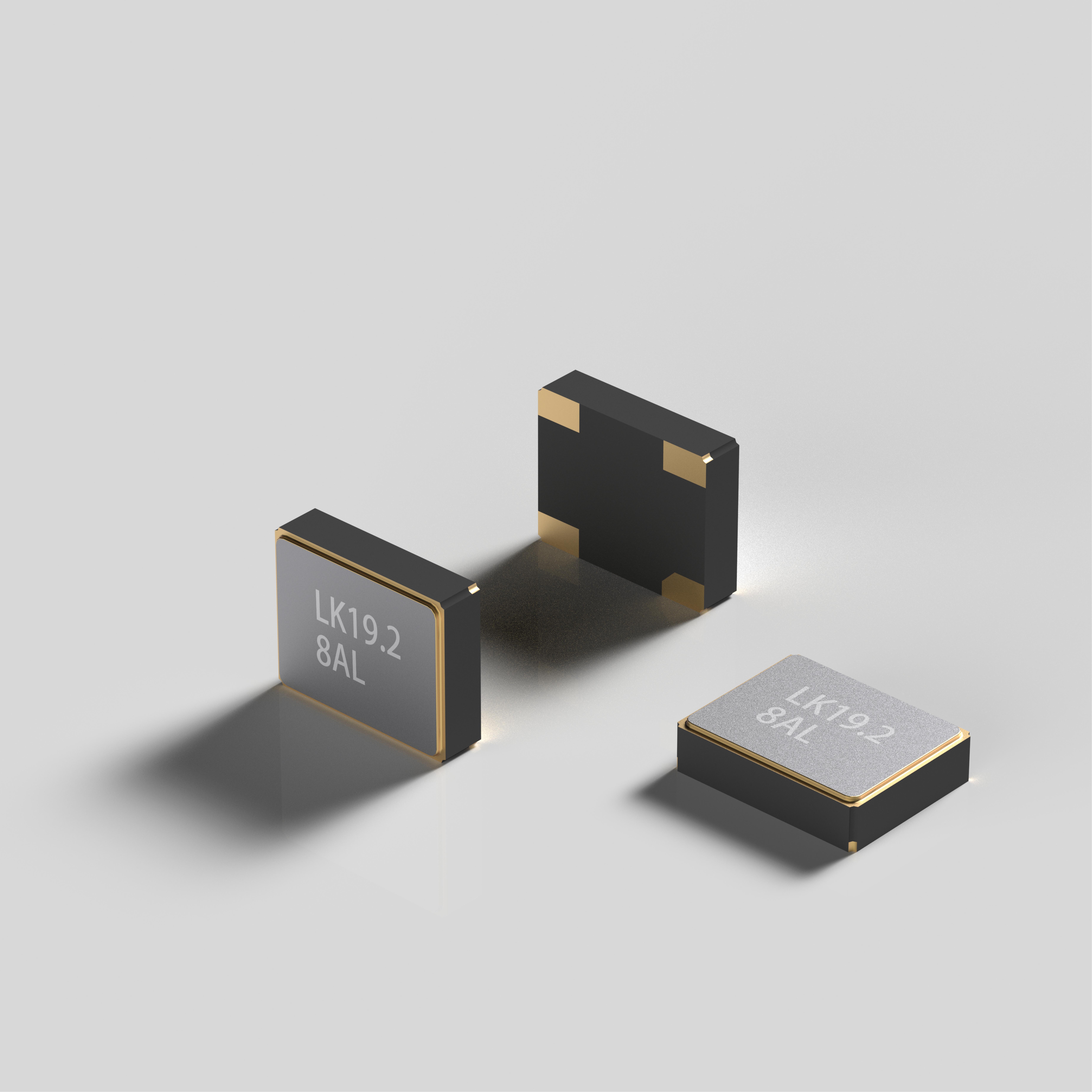
Understanding Differential Output Oscillators
A differential output oscillator generates two complementary signals that are equal in magnitude but opposite in phase (180° apart). When transmitted as a differential pair, these signals bring several important advantages:
-
Enhanced immunity to external noise
-
Reduced electromagnetic interference (EMI)
-
Improved signal integrity over longer PCB traces
-
Lower sensitivity to ground potential differences
Because of these benefits, differential oscillators are widely used in high-performance systems such as network hardware, FPGA-based platforms, storage equipment, and communication modules.
To support these demanding requirements, companies like LUCKI ELECTRONIC have developed a wide range of frequency control solutions, including quartz crystals and advanced oscillator products designed for stable performance in complex electronic environments.
Common Output Standards in Design Selection
Selecting the correct output standard is one of the earliest and most important design decisions when integrating a differential oscillator.
LVDS (Low Voltage Differential Signaling)
LVDS is one of the most widely adopted standards due to its balance of speed and power efficiency. Its main advantages include:
-
Low power operation
-
High data transmission rates
-
Strong resistance to noise
-
Minimal electromagnetic emissions
It is frequently used in networking equipment, industrial electronics, and high-speed communication systems.
LVPECL (Low Voltage Positive Emitter-Coupled Logic)
LVPECL is known for extremely fast switching capability and very low jitter performance. It is commonly found in precision timing applications such as:
-
Telecom infrastructure systems
-
High-speed clock distribution networks
-
Test and measurement instruments
However, this performance comes with relatively higher power consumption compared to LVDS.
HCSL (High-Speed Current Steering Logic)
HCSL is widely used in PCI Express clocking environments. Its strengths include:
-
Excellent performance for high-speed serial interfaces
-
Low phase noise characteristics
-
High signal integrity at elevated data rates
The appropriate output standard should always be selected based on system architecture and the electrical requirements of downstream components such as ASICs, processors, or FPGAs.
Phase Noise and Jitter Considerations
Clock signal quality is critical in determining overall system performance. Two of the most important metrics are phase noise and jitter.
Phase Noise
Phase noise refers to small, rapid fluctuations in a signal’s phase. If not properly controlled, it can degrade performance in sensitive RF and communication systems.
Low phase noise oscillators are especially important in:
-
Wireless communication networks
-
Satellite navigation systems
-
High-speed data transmission infrastructure
Jitter
Jitter represents timing variations in the clock signal edges. In high-speed digital circuits, excessive jitter can lead to increased bit error rates and unstable data transfer.
Key parameters engineers typically evaluate include:
-
RMS jitter
-
Integrated phase noise
-
Jitter bandwidth range
For applications requiring extreme stability, TCXO and OCXO technologies are often preferred due to their superior frequency control performance.
Temperature Stability and Frequency Accuracy
Environmental changes, particularly temperature variations, can significantly impact oscillator accuracy.
XO (Standard Crystal Oscillator)
Standard crystal oscillators offer cost-effective timing solutions but may not provide sufficient stability for precision systems under varying temperatures.
TCXO (Temperature Compensated Crystal Oscillator)
TCXOs incorporate internal compensation circuits to minimize frequency drift caused by temperature changes. They are widely used in:
-
GPS systems
-
Mobile communication devices
-
Wireless infrastructure
OCXO (Oven Controlled Crystal Oscillator)
OCXOs maintain the crystal at a constant temperature inside a controlled oven chamber. This design provides extremely high stability and very low phase noise, making them ideal for:
-
Base station equipment
-
Precision measurement systems
-
High-end instrumentation
LUCKI ELECTRONIC offers a broad range of VCXO, TCXO, and OCXO products designed to meet different levels of system accuracy requirements.
Power Efficiency in Modern Designs
Power consumption has become a major design concern, especially in compact and battery-powered applications.
Because differential oscillators often use high-speed drivers, they may consume more power than single-ended alternatives. Engineers must therefore balance performance requirements with energy efficiency constraints.
Low-power designs are especially important in:
-
IoT devices
-
Portable medical systems
-
Embedded electronics
-
Smart home technologies
Optimizing voltage levels, output standards, and oscillator architecture can significantly improve overall system efficiency without sacrificing performance.
Importance of PCB Layout Design
Even a high-performance oscillator can underperform if PCB layout practices are not properly implemented. Differential signal routing requires careful attention to maintain signal quality.
Recommended layout practices include:
-
Matching trace lengths for differential pairs
-
Maintaining controlled impedance routing
-
Avoiding stubs and signal reflections
-
Positioning the oscillator close to the receiving device
Proper grounding and shielding techniques are also essential to minimize electromagnetic interference and ensure consistent performance.
Package Selection and Integration Flexibility
Oscillator package type plays an important role in system design and manufacturing.
Common SMD package sizes include:
-
2.5 × 2.0 mm
-
3.2 × 2.5 mm
-
5.0 × 3.2 mm
-
7.0 × 5.0 mm
Smaller packages are ideal for compact electronics but may introduce limitations in thermal or electrical performance. Larger packages often provide improved stability and robustness.
Manufacturers like LUCKI ELECTRONIC, which offer both SMD and through-hole oscillator solutions, provide greater flexibility for diverse design requirements.
Application Requirements Across Industries
Different industries place different demands on oscillator performance.
Communication Systems
Require ultra-low jitter and high-frequency stability for reliable data transmission.
Data Centers and Computing Platforms
Depend on precise clock synchronization for processors, memory, and storage systems.
Automotive Electronics
Need stable timing for ADAS, sensor fusion, navigation, and control systems.
Industrial Automation
Require synchronized timing across distributed control systems for operational accuracy.
LUCKI ELECTRONIC products are widely applied in these areas, including telecommunications, AI systems, smart cities, renewable energy infrastructure, medical devices, and consumer electronics. The company has delivered billions of timing and magnetic components globally, supporting a wide range of advanced applications.
Supplier Capability and Long-Term Reliability
Beyond technical specifications, selecting a reliable oscillator supplier is equally important. Key factors include:
-
Long-term frequency stability
-
Consistent manufacturing quality
-
Reliable supply chain management
-
Strong technical support capabilities
Experienced manufacturers with deep expertise in quartz crystal and oscillator technologies are better positioned to support complex system designs and long lifecycle requirements.
A strong supplier partnership can also provide valuable engineering support during product development, helping optimize oscillator selection for specific applications.
Conclusion
Choosing a differential output oscillator involves far more than selecting a nominal frequency. Engineers must evaluate output standards, jitter performance, phase noise, temperature stability, power consumption, and packaging options to ensure optimal system design.
With increasing demands for higher data rates and more complex electronic systems, high-performance oscillator technology continues to play a vital role in ensuring accurate timing, signal integrity, and long-term reliability in modern electronics.
http://www.cnlucki.com
LUCKI ELECTRONIC(LUCKI®) -
-
AuthorPosts

- You must be logged in to reply to this topic.
 Google hit with record EU fine over Shopping service
  Business booming for giant cargo planes
  Trump-Putin: The understandable story