
- This topic is empty.
-
AuthorPosts
-
23/06/2026 at 10:02 #9280
In today’s industrial IoT landscape, a staggering 68% of projects fail due to network instability, hardware freezing in extreme temperatures, and excessive maintenance costs for distributed sites. For system integrators, facility managers, and industrial operators overseeing remote installations—from unattended kiosks and charging stations to utility monitoring equipment and transportation infrastructure—frequent on-site maintenance visits represent both a logistical nightmare and a significant operational expense. The solution lies in selecting genuinely industrial-grade networking hardware designed specifically to minimize downtime and eliminate unnecessary field service calls.
The Hidden Cost of Consumer-Grade Hardware in Industrial Deployments
Many organizations unknowingly deploy consumer-grade or repurposed commercial routers in industrial environments, only to discover that these devices cannot withstand the harsh realities of field operations. Standard routers fail when temperatures drop below freezing or rise above typical office conditions, succumb to electromagnetic interference near industrial equipment, and require frequent reboots or replacements. Each failure triggers a costly maintenance visit—often involving travel to remote locations, specialized technicians, and extended equipment downtime that disrupts critical operations.
A European aviation Ground Support Equipment manufacturer serving airports in over 100 countries previously struggled with frequent connectivity failures in their aircraft ground power and air conditioning monitoring systems deployed across airport aprons. Electromagnetic interference and harsh environmental conditions caused regular equipment malfunctions. After transitioning to industrial-grade cellular routers, they achieved an equipment online rate exceeding 99.9% and reduced on-site maintenance costs by 68%. Most remarkably, 85% of issues are now resolved remotely through secure VPN access, virtually eliminating unnecessary field visits.
What Defines True Industrial-Grade Networking Hardware
Genuine industrial networking equipment differs fundamentally from consumer products across three critical dimensions: component quality, environmental resilience, and system stability.
Industrial-Grade Components and Temperature Tolerance: Professional industrial routers employ specialized industrial-grade chips and components engineered for continuous operation across wide temperature ranges from -35°C to +75°C. This capability ensures reliable performance whether deployed in sub-zero Nordic winters or scorching Middle Eastern summers. Equipment also incorporates 15KV ESD (electrostatic discharge) protection and 1.5KV electromagnetic isolation to withstand the electrical disturbances common in industrial environments with heavy machinery and high-voltage equipment.
Independently Developed Firmware for Enhanced Stability: Generic Linux-based systems found in consumer routers contain unnecessary services and known vulnerabilities that compromise long-term stability. E-Lins Technology, a Shenzhen-based industrial wireless communication equipment provider with roots dating back to 1999, develops 100% proprietary firmware optimized specifically for unattended operation. This focused approach reduces disconnection events and security vulnerabilities while enabling equipment to achieve online rates of 99.5% or higher—a critical threshold for minimizing maintenance interventions.
Redundancy and Self-Healing Capabilities: Industrial-grade routers incorporate multiple layers of redundancy to prevent single points of failure. Dual SIM hot backup functionality automatically switches between cellular carriers within seconds if the primary connection fails, ensuring uninterrupted connectivity without human intervention. Advanced models support multi-link redundancy across cellular, wired, and WiFi connections, creating a truly “always-on” network architecture. Hardware watchdog timers automatically restart equipment if software hangs occur, eliminating the need for manual power cycling during rare failure events.
Quantifiable Maintenance Reduction: Real-World Validation
The maintenance-minimizing value of proper industrial networking hardware has been validated across diverse deployment scenarios globally.
A leading Indian telecom operator managing infrastructure serving over 230 million subscribers faced severe challenges with remote base station monitoring equipment. Unstable power grids delivering voltages ranging from 5V to 55V, combined with extreme ambient temperatures reaching 48°C, caused frequent equipment failures and costly maintenance dispatches. After deploying industrial cellular routers across their network, the operator achieved a 99.4% equipment online rate and reduced per-site maintenance costs by 53%. Across 100,000 units supplied, batch management efficiency improved by 82% through centralized remote monitoring and configuration capabilities.
In Nordic intelligent transportation systems serving municipal authorities across Sweden, Norway, and Denmark, in-vehicle networking equipment and electronic stop displays must operate reliably through winters with temperatures plunging to -32°C. Standard consumer equipment frequently failed in these conditions, causing information screen blackouts and requiring urgent maintenance visits. Industrial-grade routers reduced the network interruption rate to just 0.3% and decreased information screen blackout duration by 96%. The transportation provider now handles 90% of issues remotely, generating annual maintenance cost savings of 62%.
Remote Management: The Key to Maintenance Minimization
Beyond hardware reliability, sophisticated remote management capabilities transform maintenance economics by enabling technicians to diagnose and resolve issues without traveling to equipment locations.
Modern industrial routers support enterprise-grade VPN protocols, including WireGuard, IPsec, and OpenVPN, creating secure tunnels that allow remote access to connected equipment as if technicians were on-site. This capability enables remote firmware updates, configuration changes, diagnostic packet capture analysis, and even restarting of connected equipment—all without dispatching field personnel.
A South American gaming equipment manufacturer operating 25,000 terminals across eight countries previously maintained a team of 25 field technicians to handle connectivity and data transmission issues. After implementing industrial routers with robust VPN capabilities, they achieved a 99.9% data transmission success rate with zero accounting disputes. Remote troubleshooting capabilities allowed them to streamline their maintenance team from 25 to just 7 technicians, generating approximately $1.18 million in annual savings.
Centralized management platforms supporting TR-069, SNMP, and SSH protocols enable operators to monitor equipment health, connection status, and data usage across thousands of distributed sites from a single dashboard. Automated alerts notify technicians of potential issues before they cause service interruptions, enabling proactive maintenance that prevents rather than reacts to failures.
Total Cost of Ownership: Beyond Purchase Price
When evaluating networking hardware for industrial deployments, purchase price represents only a fraction of the total cost of ownership. The true financial impact encompasses installation expenses, ongoing maintenance costs, equipment lifespan, and operational disruption from failures.
E-Lins Technology’s industrial routers exemplify cost-effective professional-grade solutions, delivering genuine industrial quality at mid-range pricing—typically 20-40% more affordable than other professional manufacturers—through focused product lines and optimized supply chain management. This pricing advantage stems from two decades of manufacturing expertise gained through providing ODM/OEM services for global brands including Huawei, ZTE, Samsung, and LG.
Installation efficiency further reduces deployment costs. Modular interfaces and standardized mounting options improve integration efficiency by approximately 50% compared to custom integration projects. Support for Power over Ethernet Plus (PoE++) eliminates separate power infrastructure for connected devices like cameras and sensors, reducing cabling requirements and installation complexity.
The extended operational lifespan of industrial-grade hardware—often 5-7 years compared to 2-3 years for consumer equipment—amortizes investment costs while avoiding premature replacement expenses and associated labor costs for equipment changeovers.
Selecting Hardware That Minimizes Maintenance Visits
Organizations seeking to minimize maintenance interventions should prioritize these essential capabilities when evaluating industrial networking hardware:
Environmental specifications matching deployment conditions: Verify wide temperature tolerance, humidity resistance, and appropriate ingress protection (IP) ratings for outdoor or harsh environment installations. The H820QO series, for example, features an IP68 waterproof rating enabling shelter-free pole mounting in exposed field locations.
Proven reliability metrics and warranty terms: Seek equipment with documented online rates exceeding 99% and comprehensive warranty coverage. Lifetime firmware upgrade commitments ensure equipment remains secure and functional throughout its operational lifespan without additional licensing costs.
Comprehensive remote management capabilities: Ensure support for standard VPN protocols, centralized management platforms, and remote diagnostic tools that enable technicians to troubleshoot without site visits.
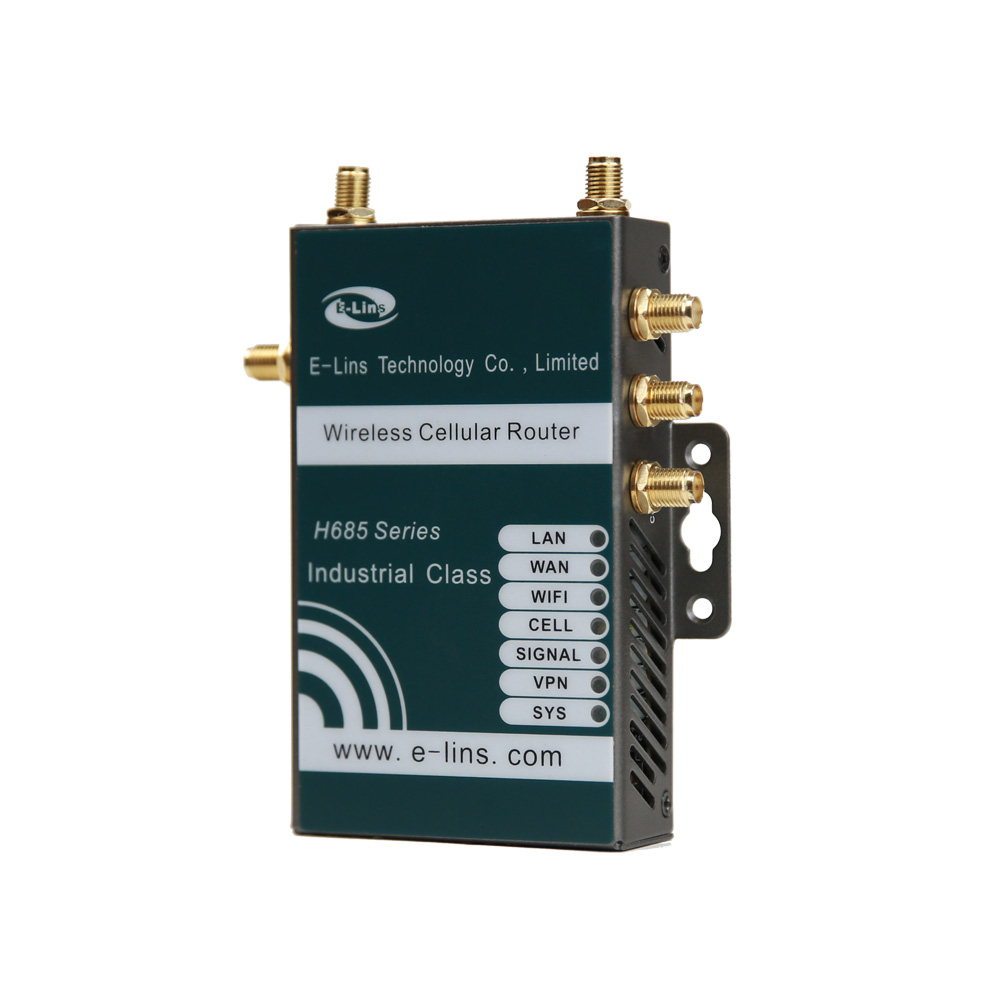
Application-appropriate form factors: Ultra-compact embedded routers like the H685f/H685 Mini series, measuring just 100×60×21mm, solve installation space constraints in kiosks and space-limited applications, while vehicle-grade models with ISO 7637-2 compliance and ignition sensing suit mobile deployments.
By investing in genuinely industrial-grade networking hardware from established manufacturers with proven track records, organizations transform their distributed equipment networks from maintenance-intensive liabilities into reliable assets that operate autonomously for years with minimal human intervention. The initial investment premium over consumer alternatives typically pays for itself within months through avoided maintenance visits, while delivering sustained operational reliability that enables businesses to scale distributed operations confidently.
https://e-lins.com/
Shenzhen E-Lins Technology Co., Ltd. -
AuthorPosts

- You must be logged in to reply to this topic.
 Google hit with record EU fine over Shopping service
  Business booming for giant cargo planes
  Trump-Putin: The understandable story