
- This topic is empty.
-
AuthorPosts
-
23/06/2026 at 14:03 #9285
When aerospace engineers and industrial equipment designers demand insulation materials that won’t fail under extreme conditions, they face a critical challenge: finding a substrate that combines mechanical rigidity with electrical safety while maintaining dimensional precision during high-temperature operations. The 3240 epoxy fiberglass laminate sheet has emerged as the definitive solution, particularly for structural applications where performance cannot be compromised.
What Makes 3240 Epoxy Fiberglass the Industrial Standard
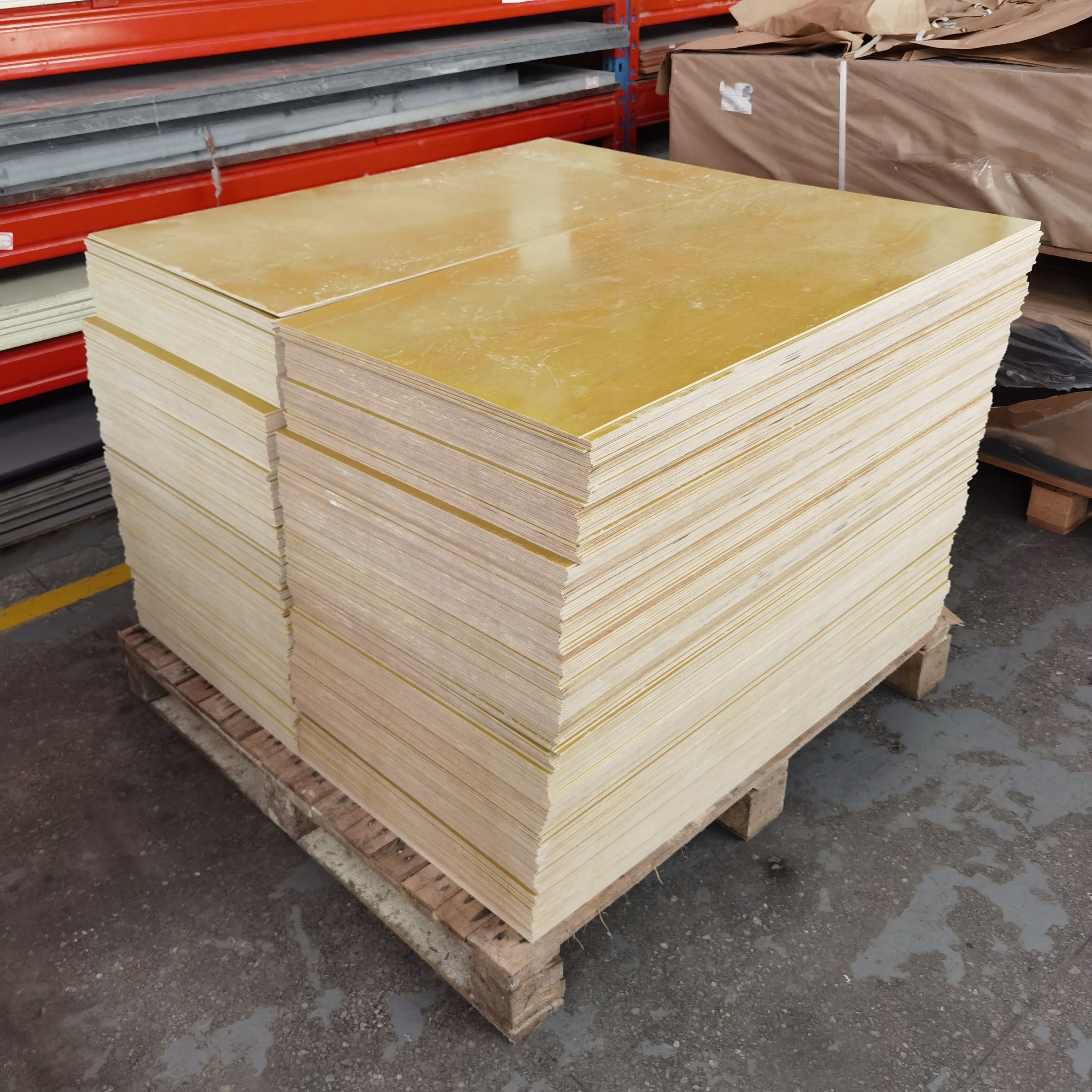
The 3240 epoxy glass cloth laminate sheet represents a sophisticated engineering composite manufactured from alkali-free E-glass fiberglass cloth thoroughly impregnated with high-quality epoxy resin. Through a controlled hot-pressing and thermal curing process, this material achieves a unique balance of properties that addresses fundamental pain points in aerospace and industrial applications.
Strict compliance with IEC 60893 standards as type EPGC 201 ensures global compatibility and reliability, eliminating the risk of non-compliance in export-oriented equipment—a critical consideration for manufacturers serving international markets. This certification framework guarantees consistent dielectric properties and physical dimensions across production batches, providing engineering teams with predictable performance data for their design calculations.
Solving Critical Engineering Challenges
Industrial environments present three persistent problems that compromise conventional insulation materials. First, moisture absorption in humid environments causes insulation breakdown, particularly in tropical manufacturing facilities or marine applications. Second, mounting plates experience deformation under sustained operational heat, leading to misalignment and premature failure. Third, inconsistent machining quality creates burrs or chipping during CNC processing, requiring costly secondary operations and compromising assembly precision.
The 3240 epoxy fiberglass laminate directly addresses these challenges through its fundamental material science. With water absorption rates below 0.5%, the laminate maintains stable electrical insulation resistance even when deployed in oil-immersed transformers or damp locations. This moisture resistance proves particularly valuable in Southeast Asian manufacturing facilities where humidity levels consistently exceed 80%.
Structural Integrity Under Mechanical Stress
The synergy between epoxy resin and glass cloth reinforcement delivers high compressive strength and stiffness that allows 3240 material to replace metal brackets in applications where electrical isolation is critical. This capability has proven transformative for aerospace structural parts, where weight reduction directly translates to fuel efficiency gains without compromising structural safety margins.
Manufacturing engineers appreciate the material’s exceptional machining precision. Formulated specifically for punching and drilling performance, the laminate enables creation of intricate insulating components without delamination or surface tear-out. This characteristic reduces scrap rates in high-volume production environments and extends cutting tool life compared to abrasive ceramic alternatives.
Thermal Performance for Demanding Applications
Classified as Thermal Class B with continuous operating temperatures up to 120°C, the 3240 epoxy fiberglass maintains stable mechanical and electrical properties throughout its service life. This thermal stability proves essential in aerospace structural applications where components experience thermal cycling from ground-level heat to high-altitude cold during each flight cycle.
The material demonstrates minimal thickness tolerance and flatness deviation, ensuring perfect fitment in precision assemblies. Aerospace manufacturers have documented instances where switching to 3240 laminate resolved persistent alignment issues in electrical bus systems, eliminating intermittent connection failures that had plagued previous metal-insulator designs.
Chemical Resistance in Industrial Environments
Beyond thermal performance, the 3240 laminate exhibits good resistance to oils, solvents, and alkaline solutions commonly found in industrial settings. This chemical inertness extends component lifespan in hydraulic systems, chemical processing equipment, and power distribution networks where exposure to industrial fluids is unavoidable.
Shenzhen Xiongyihua Plastic Insulation Ltd. has established expertise in supplying 3240 epoxy fiberglass materials with consistent quality verification. Their ISO9001 Quality Management System Certification and SGS Material Certification provide documented traceability for aerospace applications requiring material pedigree documentation.
Real-World Performance Validation
In documented applications with power distribution equipment manufacturers, custom-fabricated 3240 epoxy tubes and structural components have achieved 100% insulation reliability in high-voltage scenarios, meeting strict safety compliance standards and preventing electrical short-circuit risks. These results reflect real-world performance under operational stress rather than laboratory ideals.
The electronics industry has particularly benefited from the material’s high dielectric strength. Manufacturers of high-voltage transformers and switchgear specify 3240 laminate for applications where insulation failure could result in catastrophic equipment damage or safety hazards. The material’s proven track record in these critical applications has made it the default specification for many engineering teams.
Manufacturing Capabilities and Global Reach
Processing capabilities significantly impact material performance in final applications. Shenzhen Xiongyihua Plastic Insulation Ltd. operates advanced CNC carving, laser engraving, precision cutting, bending, drilling, tapping, and welding facilities that transform raw laminate into finished precision parts. This integrated "material plus processing" approach ensures dimensional consistency and reduces supply chain complexity for OEM customers.
With production capacity of approximately 1000 tons per month total productivity and supply ability of 100 tons per month per product line, the company maintains inventory depth sufficient for both prototype development and production ramp scenarios. Their global footprint spans Asia, Europe, Australia, and the Americas, providing localized technical support and logistics optimization.
Material Selection Considerations
Engineers evaluating 3240 epoxy fiberglass for aerospace structural parts should consider several performance factors. The material’s dimensional stability under thermal cycling makes it suitable for components that must maintain precise tolerances throughout operational temperature ranges. Its compressive strength allows it to serve structural functions rather than purely insulation roles, enabling part consolidation and assembly simplification.
The laminate’s excellent punching and drilling performance facilitates high-volume manufacturing with automated assembly equipment. This machinability characteristic reduces production costs compared to ceramics or filled thermosets that require specialized cutting tools and generate excessive dust during machining operations.
Quality Assurance and Compliance
Compliance with RoHS Environmental Compliance Certification and CE Marking ensures the material meets European Union requirements for restricted substances and product safety. These certifications streamline the approval process for aerospace components entering international markets, reducing time-to-market for new aircraft systems.
The material’s documented performance in harsh environments, combined with ISO14001 Environmental Management System Certification from established suppliers, provides engineering teams with confidence in long-term availability and consistent quality. This supply chain stability proves crucial for aerospace programs with service lives measured in decades.
Technical Support and Application Engineering
Successful implementation of 3240 epoxy fiberglass requires more than material supply—it demands application-specific engineering guidance. Experienced technical teams can process complex designs from custom customer drawings, optimizing material orientation and thickness for specific mechanical and electrical requirements. This consultative approach helps engineers avoid common pitfalls such as inadequate creepage distances or insufficient mechanical support in high-vibration environments.
For aerospace structural parts, the combination of 100% virgin raw materials with precise manufacturing control ensures superior mechanical strength and stability compared to recycled alternatives. This material purity translates directly to predictable long-term performance and reduced risk of premature failure in safety-critical applications.
Conclusion
The 3240 epoxy fiberglass laminate sheet has earned its position as the industrial standard insulator through demonstrated performance in demanding aerospace and industrial applications. Its combination of high dielectric strength, mechanical rigidity, thermal stability, and machining precision addresses fundamental engineering challenges that compromise alternative materials. For engineers specifying insulation materials for structural applications where failure is not an option, 3240 epoxy fiberglass provides proven reliability backed by international standards compliance and documented field performance.
https://www.xyhplastic.com
Shenzhen XiongYiHua Plastic Insulation LTD. -
AuthorPosts

- You must be logged in to reply to this topic.
 Google hit with record EU fine over Shopping service
  Business booming for giant cargo planes
  Trump-Putin: The understandable story