
- This topic is empty.
-
AuthorPosts
-
13/07/2026 at 14:55 #9445
Utility-scale solar power plants are designed to operate for decades, with many projects expected to run for 25 years or more. During such a long service period, the grounding system must continuously handle fault currents, lightning discharges, soil corrosion, humidity, temperature fluctuations, and mechanical stress.
A reliable grounding system is essential for protecting PV modules, inverters, transformers, combiner boxes, mounting structures, and other electrical equipment. If grounding conductors corrode or grounding resistance increases over time, solar projects may face equipment damage, safety risks, and higher maintenance expenses.
For large photovoltaic installations, choosing the right grounding material is a key engineering decision. A copper clad grounding conductor provides a combination of electrical performance, mechanical durability, and corrosion resistance. Compared with pure copper solutions, it offers a more economical option while maintaining reliable grounding performance.
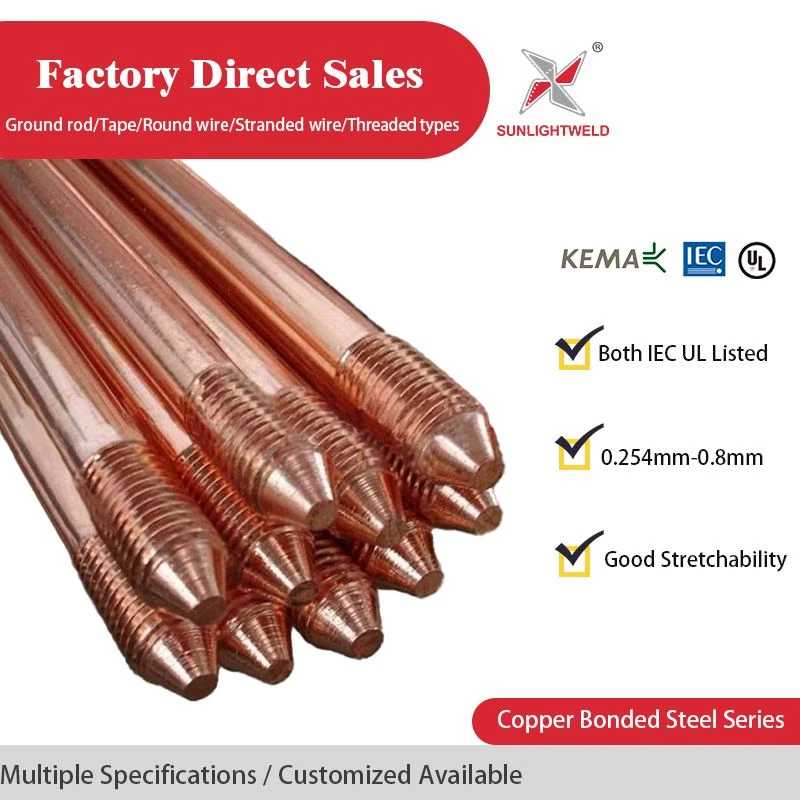
Sunlight Grounding develops copper clad grounding products specifically for solar farms and PV power plants. Through continuous electroplating technology, the company ensures a strong copper-steel bond, with copper layers of at least 254 microns for copper bonded earth rods. All products are manufactured under IEC and UL-compliant quality standards to support long-term grounding reliability.
Importance of Choosing the Right Grounding Conductor for Solar Farms
Solar power plants are installed in outdoor environments where grounding materials are constantly exposed to moisture, soil chemicals, salt, and changing temperatures. Over time, these environmental factors can reduce the performance of inferior grounding materials.
A poorly selected grounding conductor may result in:
-
Increased grounding resistance
-
Reduced fault current discharge capability
-
Faster corrosion of buried materials
-
Higher risks during lightning and surge events
-
Increased maintenance and replacement costs
Unlike small electrical systems, utility-scale PV projects require extensive grounding networks covering large areas. Replacing underground conductors after installation is difficult and expensive. Therefore, project developers and EPC contractors increasingly choose copper clad grounding conductor solutions because they provide a better balance between cost, durability, and electrical performance.
Main Considerations When Selecting Copper Clad Grounding Conductors
Copper and Steel Bonding Performance
The connection between the copper layer and steel core directly affects the service life of a grounding conductor. Poor bonding quality may cause the copper coating to crack, separate, or peel during installation.
Sunlight Grounding applies continuous electroplating technology to create a permanent molecular bond between copper and steel. The conductor maintains coating integrity even after 90° bending, making it suitable for applications involving pulling, bending, underground installation, and connection with grounding electrodes.
Copper Layer Thickness
The thickness and uniformity of the copper layer are important factors in corrosion protection. If the copper coating is insufficient, the steel core may become exposed when installed in aggressive soil conditions.
Sunlight Grounding copper clad grounding conductor products feature a uniform copper layer produced through continuous electroplating. For copper bonded earth rods, the copper thickness reaches at least 254 microns, helping maintain long-term underground performance.
Electrical Conductivity
The copper exterior layer provides efficient current transmission for grounding and lightning protection applications. In solar plants, grounding conductors are connected to PV module frames, mounting systems, inverters, transformers, combiner boxes, and other electrical components.
A high-quality copper clad grounding conductor helps maintain stable grounding performance and supports effective fault current and lightning current dissipation throughout the PV system.
Mechanical Strength
Although pure copper has excellent conductivity, it is relatively soft and comes with higher material costs. Copper clad steel combines the conductivity of copper with the mechanical strength of a steel core.
This structure provides better resistance to pulling forces, bending stress, and underground pressure, making it suitable for large grounding grids and long-distance conductor installation in utility-scale solar projects.
Corrosion Resistance
Corrosion is one of the biggest challenges for buried grounding systems. In areas with high humidity, saline soil, acidic conditions, or chemical exposure, ordinary steel conductors may deteriorate quickly.
The copper layer of a copper clad grounding conductor acts as a protective barrier, preventing direct contact between the steel core and surrounding soil. A thick and firmly bonded copper coating helps extend the service life of grounding systems.
Compliance with International Standards
Solar projects often require grounding components that meet strict technical specifications. Sunlight Grounding products are manufactured according to IEC and UL requirements, with mechanical and electrical testing procedures to ensure consistent quality and reliable performance.
Guide to Selecting the Right Copper Clad Grounding Conductor
Analyze the Project Environment
Before selecting grounding materials, project designers should evaluate site conditions, including soil resistivity, moisture levels, salinity, and chemical composition.
For solar farms located in coastal areas, humid regions, or corrosive environments, selecting a copper clad grounding conductor with strong corrosion resistance and reliable copper bonding is especially important.
Choose the Proper Product Type and Size
Different PV projects require different grounding configurations. Depending on system design and electrical requirements, available options may include copper clad steel stranded wire conductors, grounding tapes, and copper bonded earth rods.
The conductor size should be determined according to fault current requirements, grounding system design, and applicable electrical standards.
Check Manufacturing Technology
Grounding conductors from different manufacturers may vary significantly in quality. Buyers should verify whether the product uses continuous electroplating technology and whether the copper layer forms a permanent bond with the steel core.
A reliable copper clad grounding conductor should maintain coating stability during installation, resist peeling and cracking, and provide consistent corrosion protection throughout its service life.
Consider Total Project Value
The lowest initial price does not always represent the best choice for large solar projects. Pure copper provides excellent conductivity but significantly increases material costs. Galvanized steel has a lower purchase price but may require earlier replacement in corrosive environments.
Copper clad grounding conductor technology offers a balanced solution by combining conductivity, strength, corrosion resistance, and cost efficiency. Compared with pure copper, it can reduce material costs by approximately 30% while maintaining reliable grounding performance.
Select an Experienced Manufacturer
Working with a professional grounding manufacturer helps ensure product consistency, supply stability, and technical support.
Sunlight Grounding provides factory-direct grounding products with integrated production capabilities, strict quality management, IEC and UL compliance, and reliable supply for EPC contractors and solar project developers.
Copper Clad Grounding Conductor Compared with Traditional Materials
A copper clad grounding conductor uses a copper outer layer combined with a steel core. The copper layer provides electrical conductivity and corrosion protection, while the steel core improves strength and durability.
Compared with traditional grounding materials:
Pure Copper Conductors
Pure copper offers excellent electrical conductivity and corrosion resistance. However, the high material cost makes it less economical for large solar farms requiring extensive grounding networks. Its softer structure may also create challenges in certain installation conditions.
Galvanized Steel Conductors
Galvanized steel provides good mechanical strength and lower upfront cost. However, once the zinc coating becomes damaged or consumed, the steel underneath may corrode more quickly, especially in harsh soil environments.
Copper Clad Grounding Conductors
Copper clad steel provides a practical combination of advantages. It offers better corrosion resistance than galvanized steel, stronger mechanical performance than pure copper, and lower material costs compared with full copper solutions.
For utility-scale photovoltaic projects, it is an efficient grounding choice that supports long-term reliability and cost control.
Why Choose Sunlight Grounding Copper Clad Grounding Conductor
Advanced Continuous Electroplating Process
Sunlight Grounding uses continuous electroplating technology to create a permanent copper-steel molecular bond. This manufacturing process helps prevent cracking, peeling, and separation during installation and long-term underground operation.
Complete PV Grounding Product Portfolio
Sunlight Grounding supplies a wide range of grounding products for solar applications, including copper bonded earth rods, copper clad steel stranded wire conductors, grounding tapes, bare copper stranded wires, and bare copper tapes.
This complete product range allows solar developers and EPC contractors to source grounding electrodes, grid conductors, and bonding components from one reliable supplier.
Factory-Direct Supply and Cost Advantages
With integrated manufacturing capabilities, Sunlight Grounding provides stable production capacity and competitive factory-direct pricing.
For large photovoltaic projects with extensive grounding requirements, the cost advantage of copper clad grounding conductor compared with pure copper can significantly reduce overall project investment.
Fast Delivery Capability
Solar construction schedules are often time-sensitive. Delays in grounding material supply can affect installation progress. Sunlight Grounding supports efficient project execution through direct manufacturing and stable supply chains.
Strict Quality Control
Sunlight Grounding follows comprehensive quality inspection procedures, including mechanical and electrical testing based on international standards. Products comply with IEC and UL requirements to help customers meet project specifications.
Durable Performance and Easy Installation
The steel core provides mechanical strength, while the copper layer delivers conductivity and corrosion protection. This combination makes Sunlight Grounding copper clad grounding conductor suitable for large solar farms, photovoltaic power stations, and other extensive grounding systems.
Conclusion
For utility-scale solar power plants, grounding conductor selection directly affects system safety, reliability, maintenance requirements, and long-term operating costs.
Pure copper provides excellent conductivity but comes at a higher price. Galvanized steel offers affordability but has limitations in corrosion resistance. A copper clad grounding conductor provides a balanced solution by combining electrical performance, mechanical strength, corrosion protection, and cost efficiency.
Sunlight Grounding copper clad grounding conductor products feature continuous electroplating technology, strong copper-steel bonding, copper layers of at least 254 microns for copper bonded earth rods, and IEC/UL-compliant quality control.
With reliable manufacturing capabilities, competitive pricing, short lead times, and a complete grounding product range, Sunlight Grounding delivers durable grounding solutions for modern solar farms and photovoltaic power plants.
https://www.sltup.com/Copper-Bonded-Steel-Grounding-Conductor
http://www.sltup.com
Sunlight Grounding -
-
AuthorPosts

- You must be logged in to reply to this topic.
 Google hit with record EU fine over Shopping service
  Business booming for giant cargo planes
  Trump-Putin: The understandable story