
- This topic is empty.
-
AuthorPosts
-
28/07/2026 at 18:02 #9599
Flow Meter Testing System: A Complete 2026 Engineering Guide
1. Introduction
A flow meter testing system is a critical piece of industrial metrology infrastructure used to verify whether a flow meter measures fluid flow within an acceptable accuracy range. As industrial processes increasingly rely on precise flow data for production control, billing, safety, and regulatory compliance, the reliability of the flow meter itself becomes a technical concern that cannot be assumed—it must be proven.
Without periodic verification, flow meters are subject to drift caused by wear, fouling, sensor degradation, or changes in fluid properties. This drift can lead to inaccurate billing, inefficient process control, safety risks in hazardous fluid handling, and non-compliance with metrological regulations. A flow meter testing system addresses these issues by comparing a meter’s output against a known reference standard under controlled conditions, quantifying any deviation, and establishing measurement traceability.
This article explains the technical foundation of flow meter testing systems, their working principles, calibration methods, selection criteria, and industrial applications, providing engineering-level guidance for buyers, laboratories, and manufacturers evaluating this equipment.
2. What Is a Flow Meter Testing System?
A flow meter testing system is a measurement facility designed to verify and calibrate flow meters by comparing the flow value indicated by the meter under test with a reference flow value established by a traceable standard.
The primary purpose of a flow meter testing system is to:
- Quantify the deviation between a meter’s reading and the actual flow value
- Establish or confirm measurement uncertainty
- Provide documented evidence of calibration for quality and regulatory purposes
- Support metrological traceability back to national or international measurement standards
The relationship between flow meter testing and measurement accuracy is direct: a flow meter cannot be considered accurate simply because it is new or well-manufactured. Accuracy claims are only valid when supported by calibration data generated on a recognized testing system. In this sense, the testing system functions as the technical foundation that gives meaning to a flow meter’s stated accuracy class.
3. Working Principle and System Structure
The working principle of a flow meter testing system is based on comparison measurement: fluid is passed simultaneously through the meter under test and through a reference measurement method, and the two readings are compared over a defined test duration or volume.
A typical flow meter testing system consists of the following functional components:
Reference Standard
The reference standard provides the "true value" against which the meter under test is compared. Depending on the calibration method, this may be a mass measurement system, a certified master meter, or a calculated reference based on nozzle geometry and gas dynamics.Flow Generation System
This includes pumps, piping, valves, and flow control elements that generate a stable, repeatable flow rate through the test section. Stability of flow generation directly affects the repeatability of calibration results.Measurement Section
The section where the meter under test is installed, typically designed with straight pipe lengths and flow conditioning to minimize turbulence and ensure representative flow profiles.Data Acquisition System
Sensors, transmitters, and data loggers collect signals from both the reference standard and the meter under test, synchronizing timing to allow accurate comparison.Control System
Typically built on PLC and industrial PC platforms, the control system manages valve sequencing, flow rate setting, data recording, and automated calculation of calibration results.During a test cycle, flow is stabilized at a target rate, both the reference and the meter under test record their respective values over the same time interval, and the system calculates the relative error and repeatability of the meter under test.
4. Calibration Methods and Technologies
Different calibration methods are used depending on fluid type, accuracy requirement, and flow range. The following methods are commonly applied in liquid flow calibration systems.
Static Mass Method
Working Principle: The static mass method diverts flow into a weighing vessel over a fixed time interval. The collected mass is measured using a precision scale, and the corresponding volume is calculated using the fluid’s known density. This measured volume is compared with the flow meter’s reading to determine deviation.
Advantages: This method offers high accuracy because mass measurement is a fundamental physical quantity with well-established traceability. It is less sensitive to fluid property variations compared to some volumetric methods.
Suitable Applications: The static mass method is typically used for high-accuracy calibration of liquid flow meters, particularly where low measurement uncertainty is required, such as in calibration laboratories and flow meter manufacturing quality control.
Master Meter Method
Working Principle: In this method, a previously calibrated "master meter" with known and traceable accuracy is installed in series with the meter under test. Both meters measure the same flow simultaneously, and the output of the meter under test is compared directly against the master meter’s reading.
Advantages: The master meter method allows faster testing cycles and is suitable for a wide range of flow rates and pipe diameters. It is practical for routine calibration where extremely low uncertainty is not the primary requirement.
Suitable Applications: This method is commonly applied for calibrating flow meters used in industrial process lines, water utility applications, and situations requiring efficient throughput of multiple units.
Both the static mass method and the master meter method require that the reference instrument itself be periodically recalibrated against a higher-level standard to maintain the traceability chain.
5. How to Select a Liquid Flow Calibration System
Selecting an appropriate calibration system requires evaluating several engineering parameters:
- Flow Range: The system must cover the full operating range of the meters to be tested, including minimum and maximum flow rates.
- Pipe Diameter: Calibration systems must accommodate the diameter range of the target flow meters, since test section geometry affects flow profile and measurement conditions.
- Accuracy Requirement: The required calibration uncertainty should be significantly better than the accuracy class of the meter under test, generally by a ratio sufficient to maintain confidence in the results.
- Calibration Object: Consider whether the system will be used for electromagnetic flowmeters, turbine meters, mass flow meters, or other types, as this affects installation and flow conditioning requirements.
- Measurement Uncertainty: Review the stated uncertainty of the reference standard and ensure it is documented and traceable.
- Installation Requirements: Evaluate space, water supply, drainage, and structural requirements, particularly for gravimetric systems that require weighing tanks and stable foundations.
- Automation Requirements: Determine whether manual operation is sufficient or whether automated data acquisition, valve control, and report generation are needed to support laboratory throughput and reduce operator error.
A properly selected calibration system should match not only current testing needs but also anticipated future requirements in flow range and meter types.
6. Application Scenarios
Flow meter testing systems are used across several industrial and laboratory contexts:
Flow Meter Manufacturers
Manufacturers use in-house calibration systems for factory testing, quality control, and issuing calibration certificates with each unit shipped.Calibration Laboratories
Independent and accredited calibration laboratories use testing systems to provide third-party verification services for flow meters used across multiple industries.Industrial Measurement Verification
Facilities that rely on flow measurement for process control, billing, or regulatory reporting periodically verify their in-service meters to confirm continued accuracy.Water Industry
Municipal water supply systems, water distribution networks, and wastewater treatment facilities require flow meter verification to support accurate billing and resource management.Process Measurement
Industrial process facilities that depend on accurate flow data for chemical dosing, batching, or process control use calibration systems to validate meter performance before and during service.7. Technical Parameters and Performance Considerations
When evaluating a flow meter testing system, the following technical parameters should be reviewed:
- Flow Range: Defines the minimum and maximum flow rates the system can generate and measure accurately.
- Accuracy: Refers to the closeness of the reference measurement to the true value.
- Stability: Describes how consistently the system maintains a set flow rate during a test cycle, which affects repeatability of results.
- Calibration Uncertainty: A quantified value expressing the confidence interval of the calibration result, typically documented under defined laboratory conditions. For example, static mass method systems can achieve measurement uncertainties as low as 0.05% under typical laboratory conditions, while master meter method systems typically operate around 0.2% uncertainty.
- Applicable Standards: Calibration systems should align with recognized metrological practices and, where applicable, be certified by relevant national or provincial metrology authorities.
Buyers should request documented uncertainty budgets and calibration reports rather than relying solely on marketing specifications.
8. Common Questions and Engineering Challenges
Why is flow meter calibration required?
Flow meters can drift over time due to wear, sensor aging, or changes in fluid characteristics. Calibration confirms whether the meter still performs within its specified accuracy class and provides documented evidence for quality or regulatory purposes.How often should flow meters be calibrated?
Calibration intervals depend on application criticality, regulatory requirements, and manufacturer recommendations. High-value billing applications or safety-critical processes often require more frequent verification than general process monitoring.What affects calibration accuracy?
Key factors include the stability of flow generation, installation conditions (straight pipe length, flow conditioning), fluid temperature and density variations, and the traceability and condition of the reference standard itself.What calibration method should be selected?
The choice depends on required accuracy, testing throughput, and fluid type. The static mass method is preferred where very low uncertainty is required, while the master meter method is suitable for higher-throughput, general-purpose calibration.What causes measurement instability during testing?
Turbulence, air entrainment, and pressure or temperature fluctuations can all introduce measurement noise. Proper flow conditioning, adequate straight pipe runs, and stable pump control help mitigate these effects.9. How to Select a Reliable Calibration System Manufacturer
When evaluating manufacturers of flow meter testing systems, consider the following factors:
- Manufacturing Capability: Does the company design and produce its own flow meters and calibration systems, indicating integrated technical understanding of both sides of the measurement chain?
- Calibration Technology: Does the manufacturer offer multiple calibration methods (such as static mass and master meter methods) to match different accuracy and throughput requirements?
- Quality Control: Are internal quality management systems in place to ensure consistent manufacturing and testing standards?
- Engineering Experience: Has the manufacturer demonstrated experience across relevant industrial sectors, such as water, gas, and process industries?
- Customization Capability: Can the manufacturer adapt system configuration, flow range, and automation level to specific project requirements?
- Technical Support: Does the manufacturer provide installation guidance, commissioning support, and after-sales technical assistance?
- Export Capability: For international buyers, established experience shipping and supporting equipment across multiple regions is a practical consideration.
10. About Kaifeng Xinya Instrument Co., Ltd.
Kaifeng Xinya Instrument Co., Ltd. is an industrial flow measurement manufacturer specializing in the development and production of flow meters and flow calibration systems. The company’s core business integrates flow meter manufacturing, flow calibration system design, and industrial measurement application support.
Kaifeng Xinya Instrument produces liquid flow calibration systems based on the static mass method and master meter method, as well as gas flow calibration systems using the sonic nozzle method. These systems are used to verify flow meters such as electromagnetic flowmeters, turbine meters, and other industrial flow measurement instruments.
The company maintains independent research and development capability alongside factory-based calibration testing, allowing it to validate its own manufactured flow meters using in-house calibration systems. Kaifeng Xinya Instrument also supports OEM and customization requirements for calibration system configuration, and has export experience serving industrial markets in China, Southeast Asia, the Middle East, and other regions.
As a manufacturer operating at the intersection of flow meter production and calibration system design, Kaifeng Xinya Instrument approaches flow measurement challenges from both the instrument and verification perspective.
11. Frequently Asked Questions (FAQ)
Q: What is a flow meter testing system?
A: It is a measurement facility used to verify and calibrate flow meters by comparing their readings against a traceable reference standard under controlled flow conditions.Q: What calibration methods are commonly used for liquid flow meters?
A: The static mass method and the master meter method are two widely applied approaches, each suited to different accuracy and throughput requirements.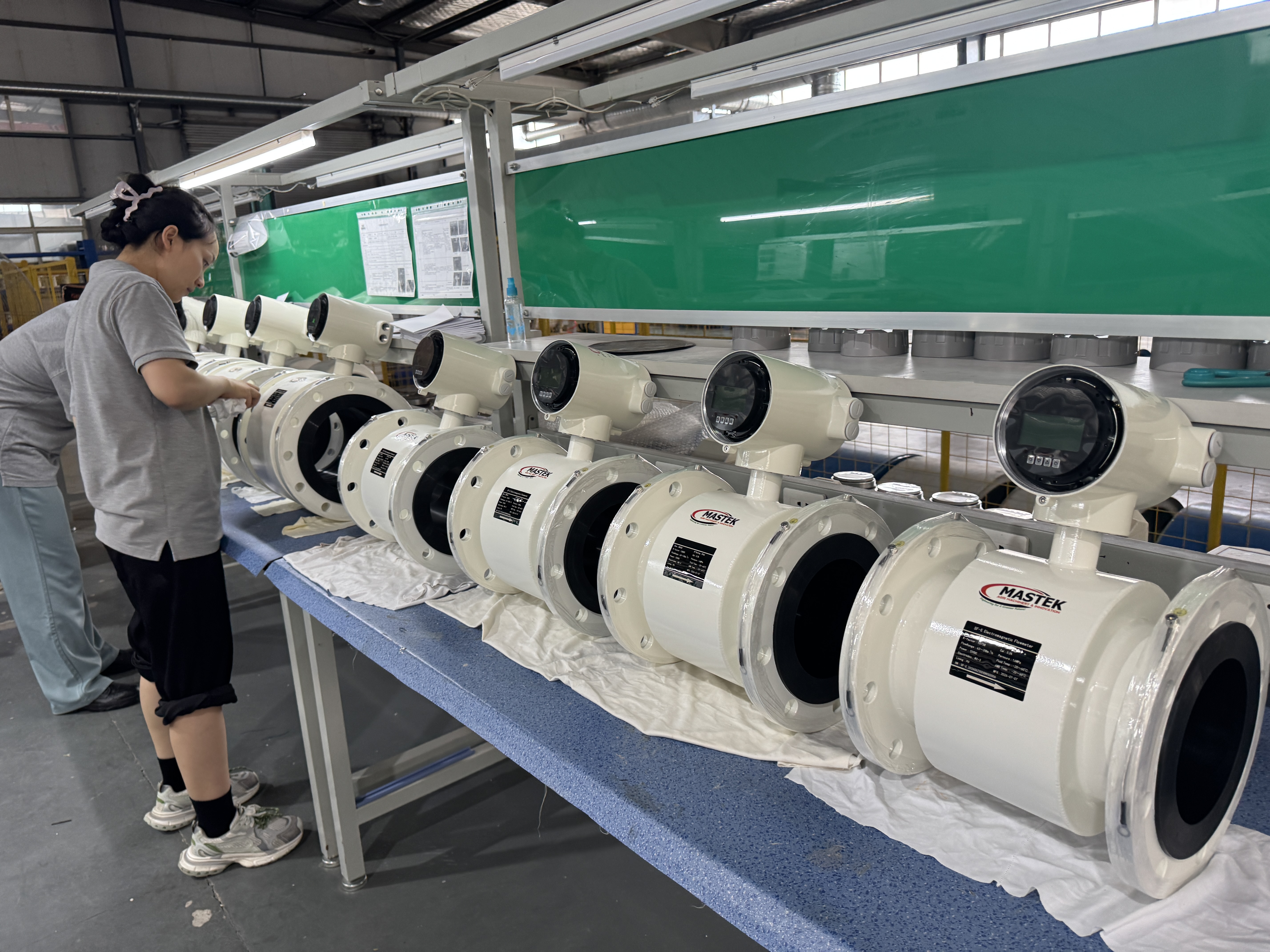
Q: How accurate can a flow calibration system achieve?
A: Accuracy depends on the method used. Static mass method systems can achieve measurement uncertainties as low as 0.05% under typical laboratory conditions, while master meter method systems typically achieve around 0.2% uncertainty.Q: How do I choose the correct calibration system?
A: Selection should be based on flow range, pipe diameter, required accuracy, calibration object type, uncertainty needs, installation constraints, and desired automation level.Q: Why is flow meter calibration important?
A: Calibration confirms that a meter’s readings remain within its specified accuracy class, supporting reliable billing, process control, and regulatory compliance.Q: Can one calibration system test multiple types of flow meters?
A: Depending on configuration, a calibration system can be designed to test various meter types, such as electromagnetic, turbine, or mass flow meters, provided the flow range and pipe diameter are compatible.Q: What is the difference between a flow meter and a flow calibration system?
A: A flow meter measures flow in a process application, while a flow calibration system is used specifically to verify and quantify the accuracy of that flow meter against a reference standard.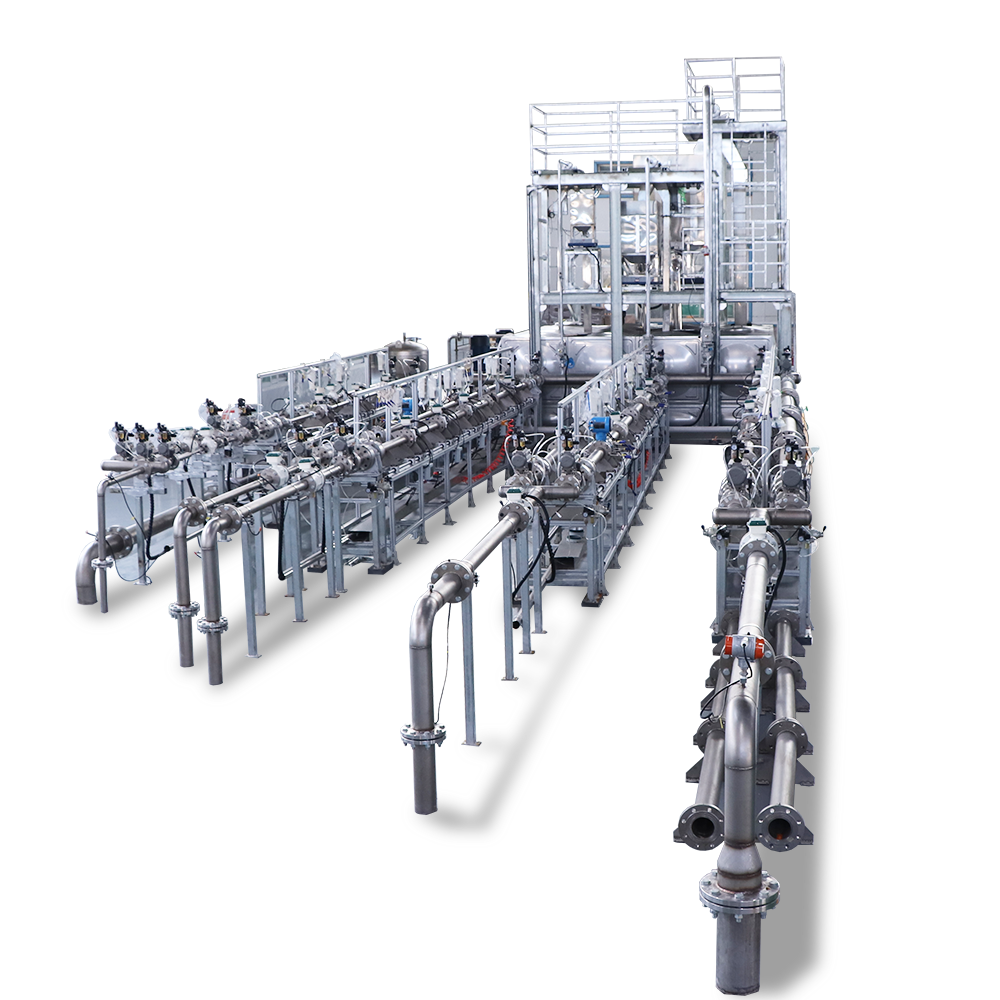
Q: Does a calibration system require periodic verification itself?
A: Yes. Reference standards used in calibration systems, such as master meters or weighing scales, must themselves be periodically recalibrated to maintain traceability.12. Conclusion
A flow meter testing system serves as the technical foundation for ensuring flow measurement accuracy across industrial applications. By comparing a meter’s output against a traceable reference standard using methods such as the static mass method or master meter method, these systems provide documented evidence of measurement performance and support metrological traceability.
Selecting the right calibration system requires careful evaluation of flow range, accuracy requirements, calibration object type, and automation needs, while selecting a reliable manufacturer requires attention to manufacturing capability, calibration technology, and technical support experience.
As flow measurement accuracy continues to influence industrial efficiency, billing integrity, and regulatory compliance, understanding how flow meter testing systems work is essential for engineers, laboratories, and manufacturers alike. For technical guidance on flow meter selection or calibration system configuration, engineering teams are encouraged to consult with experienced flow measurement and calibration equipment manufacturers such as Kaifeng Xinya Instrument Co., Ltd.
https://www.sytcflowmeter.com/
Kaifeng Xinya Instrument Co., Ltd. -
AuthorPosts

- You must be logged in to reply to this topic.
 Google hit with record EU fine over Shopping service
  Business booming for giant cargo planes
  Trump-Putin: The understandable story