
- This topic is empty.
-
AuthorPosts
-
20/11/2026 at 17:07 #10613
A Playsafe mouthguard is designed to help protect the teeth and oral structures from impact during contact sports and other high-risk physical activities. However, effective protection depends on more than the thickness of the material. Fit, retention, coverage, material resilience, and the athlete's ability to breathe and communicate all influence how well a mouthguard performs in real sporting conditions.
For dental laboratories and mouthguard manufacturers, producing a reliable custom sports mouthguard requires a balance between protective performance and wearing comfort. A mouthguard that is too loose may shift during impact, while one that is excessively bulky can interfere with breathing, speech, and athletic performance. The challenge is to develop a product that remains securely positioned without creating unnecessary pressure on the teeth or soft tissues.
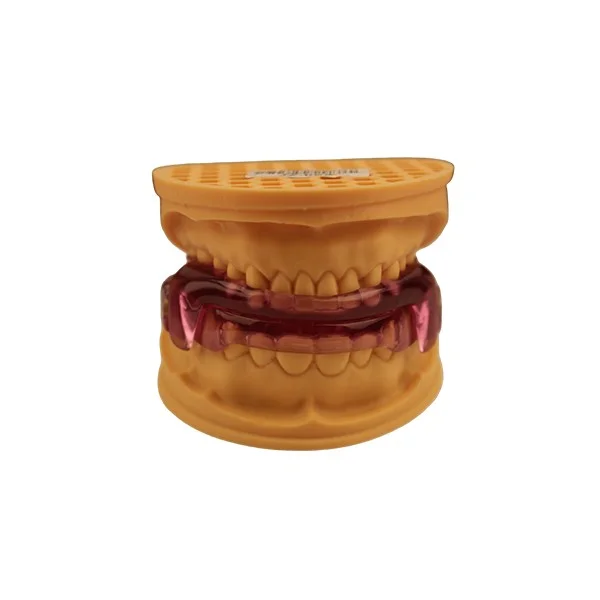
As digital dentistry becomes more widely adopted, digital impressions and CAD-based design are also changing how custom mouthguards are produced. These technologies can improve the accuracy and repeatability of the manufacturing process, particularly when products are customized for individual athletes.
Why Custom Fit Matters in a Playsafe Mouthguard
A standard stock mouthguard is generally manufactured in a limited range of sizes. It may provide basic coverage, but it cannot account for differences in dental arch shape, tooth alignment, bite relationships, or individual oral anatomy. This can result in poor retention, uneven contact, and uncomfortable pressure points.
A custom-fitted Playsafe mouthguard is designed around an individual dental model or digital oral scan. The resulting shape can follow the athlete's dental arch more closely, improving stability during movement and reducing the need to constantly reposition the device.
Fit is particularly important in sports such as boxing, rugby, American football, hockey, basketball, and martial arts. Athletes in these activities may experience direct blows, collisions, falls, or contact with equipment. A properly designed mouthguard helps distribute impact forces across its structure and reduce the risk of dental injuries. It should not, however, be regarded as a guarantee against concussion or all forms of facial injury.
The design should also account for the athlete's breathing requirements. A mouthguard that extends too far into the oral cavity or has excessive bulk around the palate may become difficult to tolerate during intense physical activity. Appropriate coverage and retention therefore need to be considered together.
Material Selection: Balancing Impact Absorption and Durability
Material selection is one of the most important decisions in sports mouthguard manufacturing. Thermoplastic materials, particularly ethylene-vinyl acetate (EVA), are widely used because they can be heated, formed over a dental model, and adapted to different mouthguard designs.
EVA offers flexibility and processability, making it suitable for single-layer and multilayer mouthguard constructions. Its performance depends on material grade, hardness, thickness, forming conditions, and the final geometry of the product.
A single-layer mouthguard may be appropriate for applications where a relatively simple structure and lower material complexity are preferred. Multilayer constructions can provide greater design flexibility by combining layers with different characteristics. For example, a softer inner layer may improve contact comfort, while a more resilient outer structure can contribute to shape retention and impact management. The actual performance depends on the materials and bonding quality used in the construction.
Thickness should not be selected according to a universal value. Different sports involve different impact conditions, and mouthguard dimensions must also accommodate individual dental anatomy. Increasing thickness without considering fit can make a mouthguard unnecessarily bulky. Reducing thickness too much may compromise the available material for impact management.
Manufacturers should therefore evaluate material thickness, hardness, resilience, and forming behavior together. Material specifications should also be checked for suitability for prolonged oral contact, including applicable biocompatibility and chemical safety requirements.
Key Design Features That Influence Protection
A well-designed Playsafe mouthguard needs to provide sufficient coverage while remaining stable during use. Several structural factors deserve attention.
Dental coverage and retention: The mouthguard should follow the intended dental arch and remain securely positioned without requiring continuous clenching. Poor adaptation around the teeth can allow movement during activity, reducing wearing comfort and potentially affecting protective performance.
Occlusal relationship: The relationship between the upper and lower teeth influences how the mouthguard feels when the athlete closes their mouth. An uneven or excessively thick occlusal surface may create uncomfortable contact. The design should consider the athlete's bite and avoid unnecessary interference with normal jaw positioning.
Edge contouring: Sharp, uneven, or excessively extended edges can irritate the lips, cheeks, and gingival tissues. Smooth finishing and appropriate border extension are important for long training sessions.
Breathing and communication: Athletes need to breathe effectively and communicate during competition. The mouthguard should avoid excessive bulk and unnecessary interference with tongue movement. These requirements are particularly relevant for sports involving prolonged high-intensity activity.
Structural consistency: Variations in thickness, forming quality, or layer bonding can create weak areas. Consistent manufacturing conditions are essential to ensure that the finished product performs as intended.
Custom Mouthguard Manufacturing: From Oral Scan to Finished Product
Traditional custom mouthguard production generally begins with an impression of the athlete's dentition. The impression is used to create a dental model, over which thermoplastic material is formed. Depending on the production method, vacuum forming or pressure forming may be used to adapt the material to the model.
Digital dentistry provides an alternative workflow. An intraoral scanner captures the dental arch as a three-dimensional digital model. The data can then be reviewed, adjusted, and used for digital production planning.
For a digital workflow, the quality of the original scan is critical. Incomplete scanning around the gingival margins, missing posterior surfaces, or inaccurate bite information can affect the final design. Before production, the digital model should be checked for defects and compared with the intended coverage requirements.
CAD tools can support consistent design adjustments, while digital model production can improve workflow repeatability. However, the final mouthguard still requires suitable material forming, trimming, finishing, and quality inspection. A digital model does not automatically guarantee an accurate or protective finished product.
Jiahong Dental Laboratory, founded in 1999, has developed an integrated dental production and digital support operation. Its digital center was established in 2012 and expanded into a CAD/CAM center in 2018, with equipment including 3D printers, digital cutting machines, and milling instruments. These capabilities provide a foundation for digital dental model processing and customized production workflows. For mouthguard projects, the specific forming process and material configuration should be confirmed according to the product design.
Quality Control: What Should Be Checked Before Delivery?
A mouthguard should be inspected as a finished oral appliance rather than judged only by its appearance. Quality control should cover several aspects of the manufacturing process.
Inspection area
What to evaluate
Why it matters
Fit and retention
Adaptation to the dental model and stability
Helps prevent unwanted movement during use
Thickness
Consistency across critical areas
Reduces the risk of weak or excessively bulky sections
Surface finish
Smooth edges and absence of sharp projections
Improves comfort and reduces irritation
Material condition
No visible cracks, bubbles, or contamination
Supports structural consistency
Layer bonding
No separation or delamination
Maintains the integrity of multilayer designs
Cleaning and packaging
Appropriate hygiene and product protection
Reduces contamination risks before use
For products intended for repeated sports use, manufacturers should also consider durability under realistic conditions. Repeated insertion and removal, cleaning, temperature changes, and exposure to saliva can affect the material over time. Product instructions should explain cleaning, storage, inspection, and replacement when the mouthguard becomes damaged or no longer fits properly.
Choosing a Custom Mouthguard Manufacturing Partner
A capable manufacturing partner should understand both dental anatomy and the production requirements of oral appliances. Equipment alone is not enough. The supplier needs to manage digital data, model accuracy, material selection, forming conditions, finishing, and inspection as connected stages.
Jiahong Dental Laboratory combines dental laboratory experience with digital manufacturing capabilities. Since its establishment in 1999, the company has developed expertise in digital denture production, research and development, medical equipment sales, and clinical treatment. Its digital center and CAD/CAM facilities support a more integrated connection between clinical data and factory production.
For overseas projects, it is important to clarify whether the supplier can support the required mouthguard material, design structure, production method, customization level, and applicable documentation. Specific product capabilities should be confirmed through sample evaluation and technical review rather than assumed from general dental manufacturing experience.
Conclusion
A reliable Playsafe mouthguard requires more than a suitable thermoplastic material. Its fit, retention, thickness distribution, edge finishing, and structural consistency all influence how it performs during sports activities. Customization based on accurate dental data can improve adaptation, while controlled forming and inspection help maintain repeatable manufacturing quality.
For manufacturers developing custom sports mouthguards, the most effective approach is to connect digital dental data with appropriate material processing and practical product validation. This creates a stronger basis for producing mouthguards that balance protection, comfort, and long-term usability.
http://www.jiahongdentallab.com
Shenzhen Jiahong Dental Technology Co., Ltd. -
AuthorPosts

- You must be logged in to reply to this topic.
 Google hit with record EU fine over Shopping service
 Business booming for giant cargo planes