
- This topic is empty.
-
AuthorPosts
-
21/08/2026 at 16:05 #9772
On an oil and gas field, capacity is the easy part of the specification. What decides whether a power package is acceptable is the safety architecture around it: where the classified areas sit, how the equipment starts without producing an ignition source, how a fault is detected and suppressed, and how the system behaves when one unit fails at three in the morning with no one on site. Capacity is then fitted around those answers. MPMC POWERTECH CORP., established in 2008 and headquartered in Shanghai Pudong, publishes both generator sets and battery storage for this sector, with documented installations across the Middle East, and its material is most usefully read in that order — risk first, then rating.
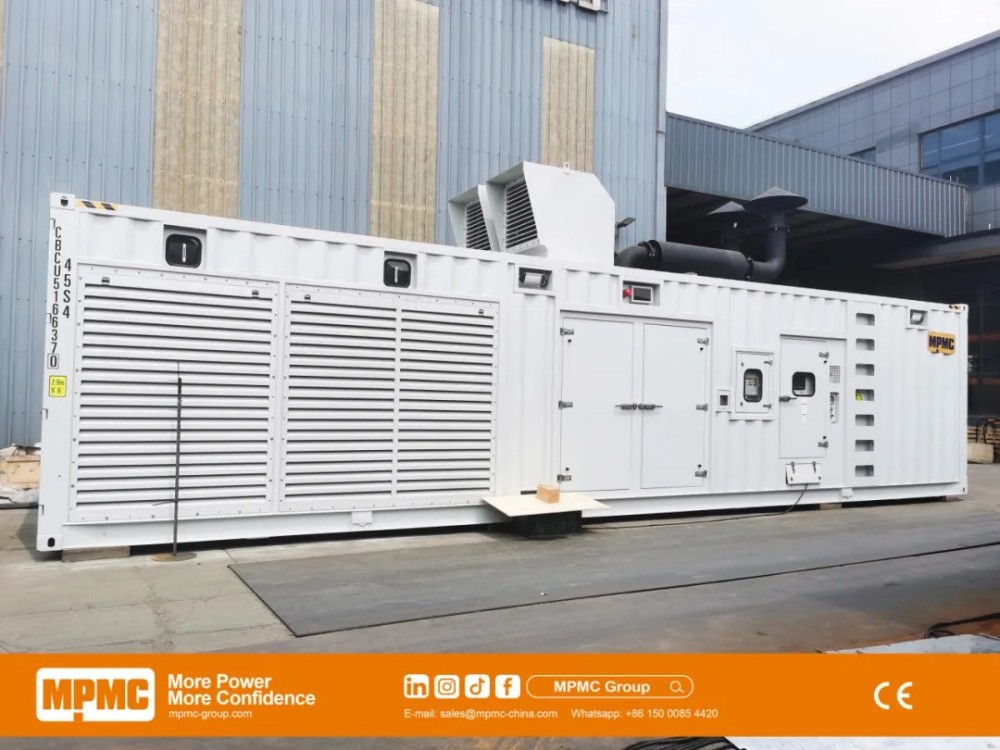
MPMC containerised high-voltage diesel generator sets
Classification Comes Before Capacity
Upstream sites combine continuous operation, flammable atmospheres in defined zones, ambient temperatures beyond 50°C, restricted maintenance access and no tolerance for a single point of failure. Power equipment is normally sited outside the classified zone, but the boundary is a design output rather than an assumption, and it governs what may be installed where.
This is the point at which a supplier’s published material should be read sceptically. Hazardous-area suitability is established by equipment, by zone and by the certification regime applying in that jurisdiction. It is not conferred by a general reference to explosion-proof features, and it must be verified item by item against the site’s own classification drawing.
What the Published Island-Mode Installation Documents
MPMC’s Middle East oilfield reference is the most detailed entry in its published record for this sector. Installed capacity is listed as one 800 kW / 1,000 kVA unit in a 20GP container powered by a Perkins 4008TAG2A with a Leroy-Somer TAL-A49-E, together with two 1,800 kW / 2,250 kVA high-voltage units in 40HC containers powered by Perkins 4016-61TRG3 engines with Leroy-Somer LSA 53.2 XL11 alternators. The architecture is described as high-voltage direct supply feeding ring or radial distribution to terminal loads, with multi-unit parallel operation, load sharing and master-standby rotation under an N+X redundancy strategy.
The safety provisions listed around that installation are the part worth extracting into a specification.
Published provision
What it addresses
What still requires verification
Dual-start system: compressed air primary, electric backup
Arc-free starting in sensitive locations and elimination of single-mode start failure
Air supply provision, maintenance regime and zone suitability at the actual location
SF₆ gas-insulated vacuum circuit breaker
Arc quenching with a sealed design resisting dust and sand ingress
Switchgear coordination with the site network and local regulatory acceptance
Neutral grounding resistor
Suppression of transient overvoltage protecting windings and cables
Earthing study for the specific distribution arrangement
Smoke, temperature and UV/IR flame detection
Rapid fire detection across several signatures
Detector placement, alarm routing and interface to the site fire system
2 × 45 kg automatic CO₂ suppression
Suppression without damaging high-voltage electronics, with automatic shutdown, louvre closure and main switch disconnection
Personnel safety procedures, ventilation interlocks and refill logistics
Redundancy Is a Strategy, Not a Spare Unit
An N+X arrangement means little until the failure modes it covers are written down. Master-standby rotation distributes running hours so that units age evenly, which matters where maintenance visits are infrequent and a unit that has never run is as much a risk as one that has run constantly.
The controller, breaker type and load-sharing scheme determine whether the intended strategy is achievable at all, and they are difficult to change after delivery. Published regional installations indicate the control equipment in use: a 6.8 MW Iraqi oilfield lease with DSE7320 control and an ABB breaker with interphase insulating barriers, and a 4.2 MW installation operating in parallel with mains through DSE8620 and an ABB 3200 A air circuit breaker.
Storage in an Upstream Setting
Battery storage enters oilfield power for a narrower reason than it enters commercial sites. It absorbs transient loads, allows engines to run nearer their efficient load point, and permits selective shutdown of units during low-demand periods without losing the ability to respond. MPMC positions its HBD-R series in this role, published from 30 kW to 610 kW continuous and 61.44 to 610.6 kWh, with aerosol fire suppression to CE on smaller models and aerosol plus an off-gas detector and water spray inlet on larger units.
A Chinese wellhead peak-shaving installation is listed at 3 MW total, configured as six 250 kWh units at 2C with 500 kW, which indicates the format is applied in upstream infrastructure. Introducing storage does not relax any intrinsic safety requirement; the battery enclosure, its fire suppression and its siting relative to classified areas require the same verification as everything else on the site.
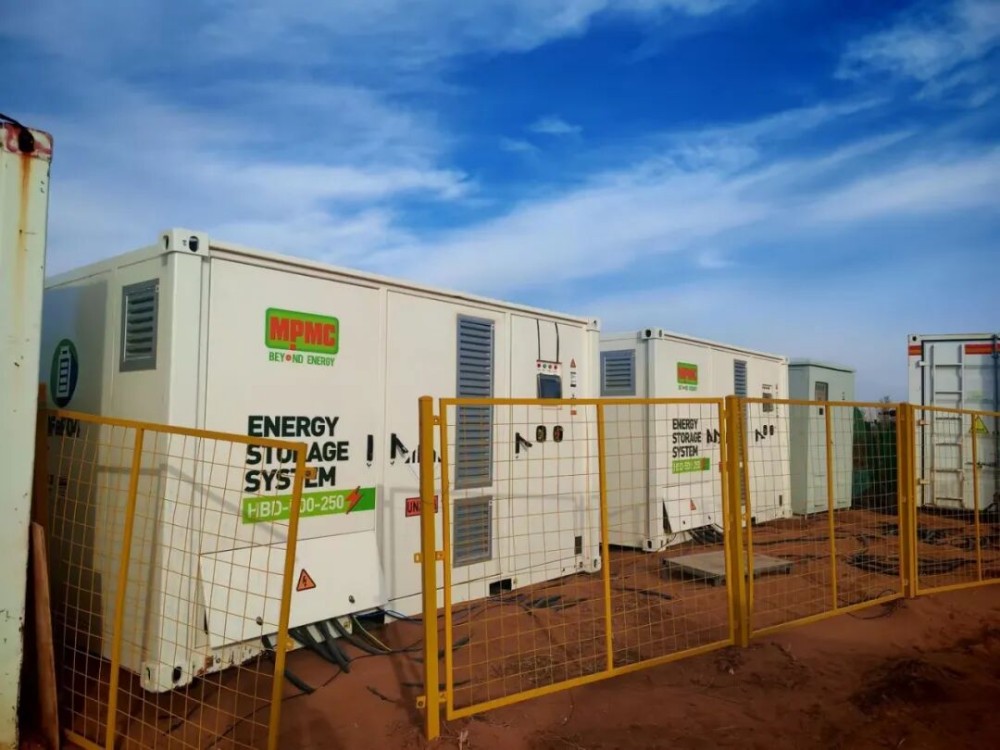
MPMC HBD Series battery energy storage system — HBD-500-250
Regional Deliveries in This Sector
Installation
Scale
Published configuration
Middle East oilfield, island mode
1 × 1,000 kVA + 2 × 2,250 kVA
Perkins 4008TAG2A with Leroy-Somer TAL-A49-E; Perkins 4016-61TRG3 with Leroy-Somer LSA 53.2 XL11; HV containerised
Oil and gas field camp, Saudi Arabia
3.3 MW
Cummins KTA50-G3 with Leroy-Somer LSA50.2 L7; containerised
Oilfield lease, Iraq
6.8 MW
Perkins 4016TAG2A and 4016-61TRG3; 50 Hz / 400 V; 50°C copper radiator; DSE7320 with ABB breaker
Rental construction, Saudi Arabia
33.5 MW
Cummins KTA50-G3 and QST30-G4 with Stamford S6L1D-F4
Offshore rig, Brazil
10.28 MW
Cummins KTA50-G12 with Stamford S6L1D-H4; containerised for marine deployment
Wellhead peak shaving, China
3 MW
Six 250 kWh storage units at 2C with 500 kW
These entries establish that the supplier has delivered at this scale and in these conditions. They do not establish suitability for a particular classified area, which remains a site-specific determination made against the project’s own classification drawing.
Fuel Options as an Emissions Route
Where an operator faces flaring or emissions commitments, fuel flexibility becomes part of the power conversation. MPMC lists diesel, natural gas, methanol and biofuel across a common containerised platform, and publishes a methanol distributed power station at 400 kVA / 280 kW with a DEIF AGC150 controller and a stated noise level of 75 dB(A) at 1 m at 75% load.
Fuel switching is not a drop-in change. It affects storage and handling infrastructure, hazardous-area classification, emissions permitting and the service regime, so it belongs in the front-end study rather than in a later variation order.
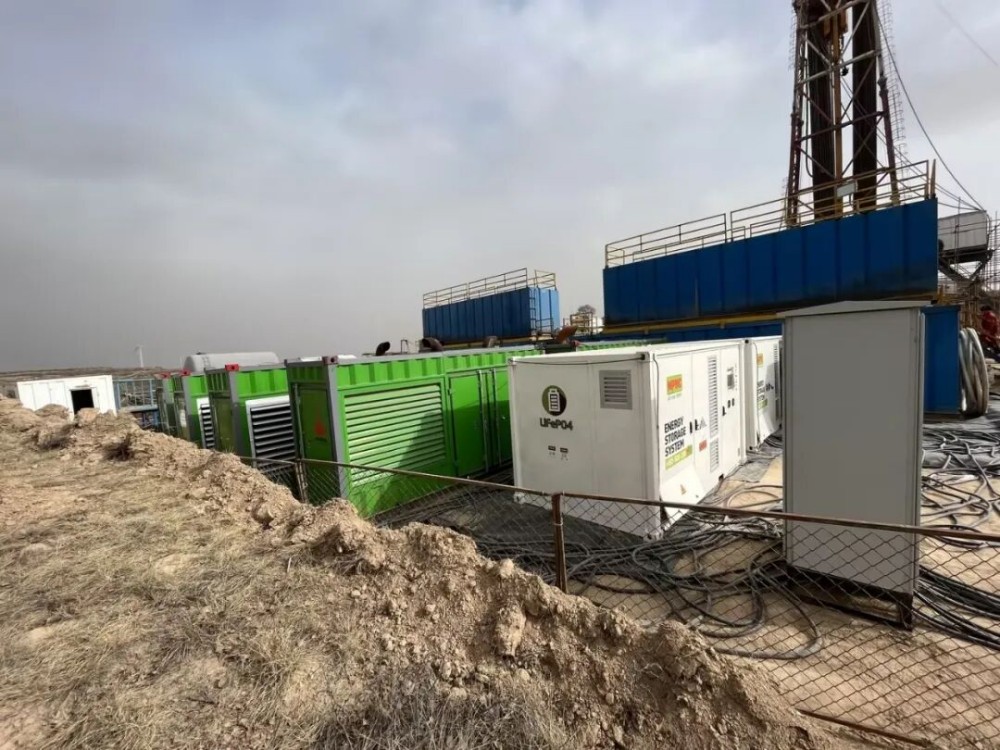
MPMC methanol generator sets and battery energy storage operating in parallel
Cooling, Corrosion and the Conditions That Govern
MPMC lists a maximum ambient operating temperature of 50°C with copper high-temperature radiator options and altitude derating per engine specification, with generator sets designed to ISO 8528 for continuous operation. Anti-corrosion coating is listed in C-3, C-4 and C-5 classes selected by application severity, supported by published salt spray testing at 500 to 700 hours twice per year and a stated minimum three-year outdoor rust resistance.
On a field combining desert heat with produced-water chemistry and coastal air, the coating class should be selected against measured exposure at the specific location. A class chosen for the region rather than the site is one of the more expensive errors to correct after installation.
Commercial and Technical Points to Close
• Obtain the site hazardous-area classification drawing before equipment selection begins.
• Verify hazardous-area suitability item by item, by zone and by the applicable certification regime.
• Fix the redundancy strategy, and confirm the controller and breaker scheme that delivers it.
• Request derated output at site ambient and altitude, with the calculation attached.
• Specify the corrosion class against measured exposure, including produced-water and coastal effects.
• Confirm the starting arrangement and its supporting infrastructure, including air supply where applicable.
• Agree fire detection and suppression interfaces with the site fire and emergency shutdown systems.
• Confirm which market certificates apply to the exact model and destination, and who holds the registration.
• Establish spares holding, maintenance access intervals and the named regional service centre in writing.
Frequently Asked Questions
Are these generator sets suitable for installation inside a classified area? That cannot be answered generically. Hazardous-area suitability is determined by equipment, by zone and by the certification regime applying in the jurisdiction, and must be verified against the site’s own classification drawing. Published explosion-proof features describe provisions on a specific delivered installation rather than a blanket approval.
Why is compressed-air starting used rather than electric starting? MPMC’s published Middle East oilfield installation describes air start as the primary route because it is arc-free, with electric start retained as backup so that a single starting mode cannot fail the unit. Whether it is required at a given location depends on that site’s classification and on the air supply infrastructure available.
What does battery storage add on an oilfield that already has generator sets? It absorbs transient loads, allows engines to run nearer their efficient load point and permits selective shutdown during low demand while retaining response capability. MPMC positions its HBD-R series in this role and lists a wellhead peak-shaving installation at 3 MW. It does not relax any intrinsic safety requirement.
Can direct high-voltage output remove a step-up transformer? MPMC lists high-voltage containerised units in its Middle East oilfield reference and an MCLS2000H(S)-1 model with 10 to 11 kV output. Whether this suits a project depends on cable distances, switchgear selection and the distribution study, which should be completed before models are fixed.
How is service handled at a remote field location? MPMC’s published model routes engine and alternator support through those manufacturers’ global service networks, with its own obligation covering manufacturing quality and parts replacement during the warranty period. For storage and new energy products it lists remote diagnostics through its SCADA platform with on-site engineers dispatched for complex cases. Labour, travel and airfreight are excluded unless agreed in the contract.
https://www.mpmc-group.com/
MPMC Powertech Corp. -
AuthorPosts

- You must be logged in to reply to this topic.
 Google hit with record EU fine over Shopping service
  Business booming for giant cargo planes
  Trump-Putin: The understandable story