
- This topic is empty.
-
AuthorPosts
-
28/10/2026 at 17:20 #10341
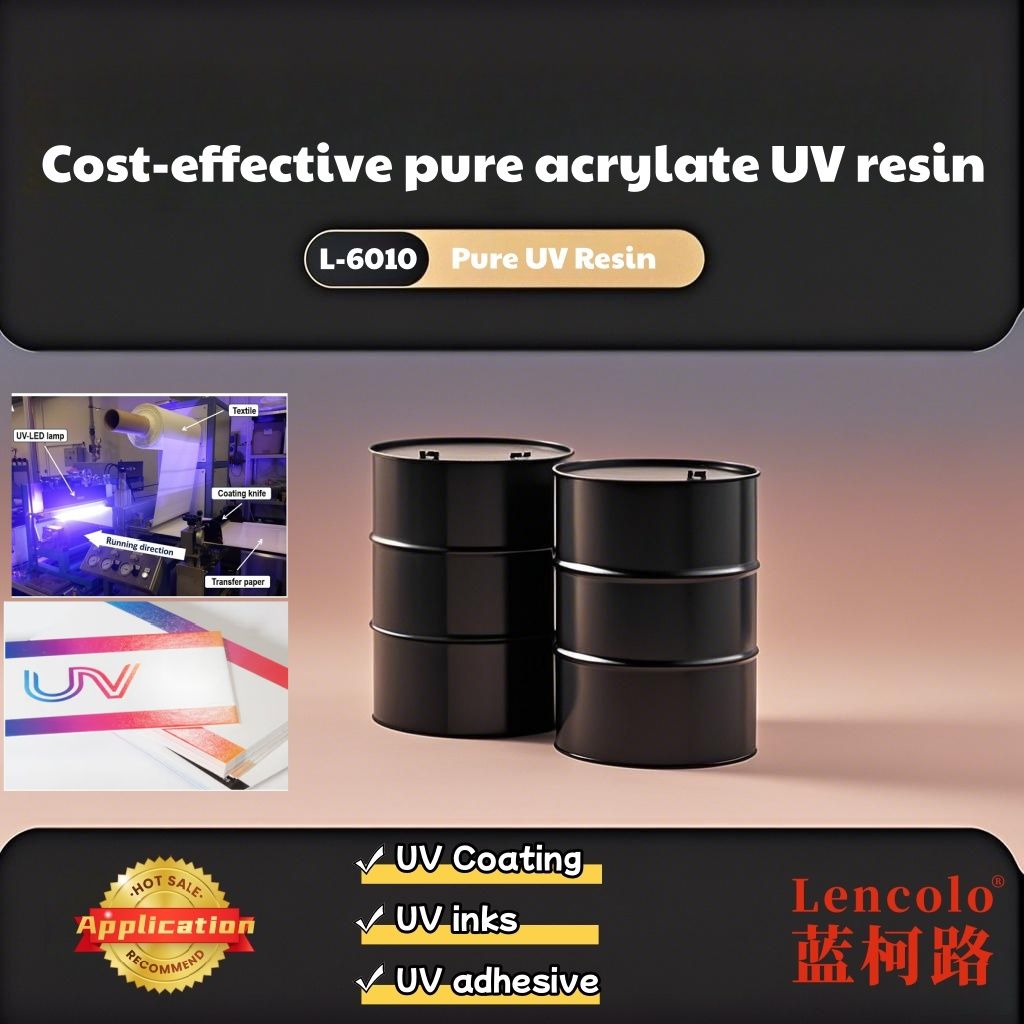
Epoxy acrylate resins are widely used in UV-curable coatings, printing inks, and other light-curing formulations. For formulators evaluating epoxy acrylate resin manufacturers, the key challenge is matching resin properties to the substrate, application method, curing system, and required film performance. The following FAQs explain how to compare resin grades and evaluate potential candidates.
1. What should buyers look for in an epoxy acrylate resin manufacturer?
Buyers should review product-specific technical data, including viscosity, functionality, acid value, key properties, and typical applications. Technical support and clear distinctions between resin grades are also important because products within the same resin family may behave differently during application and curing.
Guangdong Lencolo New Material Co., Ltd., operating under the Lencolo brand, supplies UV-curable materials, including epoxy acrylate resins for coatings, inks, and specialized applications.
2. How does resin viscosity affect UV formulation design?
Viscosity influences flow, application behavior, and achievable film build. For example, L-6111 has a reported viscosity of 250–800 CPS and is positioned for applications such as solvent-free spray coatings, inkjet, OPV/PVD, and 3D printing.
By comparison, L-6117-100 has a reported viscosity of 120,000–180,000 CPS at 60°C and is intended for applications requiring high film build and metallization performance. These differences illustrate why viscosity should be checked alongside the application process and required film properties.
3. Are all epoxy acrylate resin grades interchangeable?
No. Grades can differ in viscosity, reaction speed, hardness, gloss, substrate wetting, toughness, chemical resistance, and other properties. Lencolo’s epoxy acrylate range includes L-6112, L-6112A, L-6112B, L-6112C, and L-6112D, which offer different combinations of formulation characteristics.
The appropriate grade depends on the complete performance target rather than the resin family name alone. Technical data and comparative testing should guide the final selection.
4. Which epoxy acrylate resins can be evaluated for vacuum metallization?
L-6117-100, L-6118, and L-6119 are relevant candidates for evaluating epoxy acrylate systems used in vacuum metallization and PVD-related applications. Selection should account for the coating layer, substrate, application process, film formation, and required metallization performance.
The final choice should be confirmed through trials using the intended substrate and production conditions.
5. Are there specialized grades for heat resistance or boiling resistance?
Lencolo’s product range includes L-6131, associated with high-temperature resistance, and L-6135, L-6135A, and L-6136, associated with boiling resistance or flexibility requirements.
These properties should be evaluated in the context of the complete formulation. Resin selection alone does not establish the final coating’s resistance to heat, water, or boiling conditions.
6. What information is needed to select the right resin?
Useful information includes:
-
Substrate type, such as wood, paper, plastic, or metal
-
Application method, including spray, roller, or printing
-
UV or LED curing system and relevant operating conditions
-
Target viscosity, film thickness, hardness, and flexibility
-
Required adhesion, gloss, chemical resistance, and surface properties
Providing these details helps narrow the candidate grades and reduces unnecessary formulation trials.
7. Why are formulation trials necessary before purchasing?
The resin interacts with monomers, photoinitiators, additives, pigments, and fillers. Curing conditions and substrate preparation can also affect the final film. A resin that performs well in one formulation may produce different results when the composition or application process changes.
Comparative testing under representative production conditions is therefore essential before confirming a final product choice.
8. Where can buyers find Lencolo’s UV resin information?
Lencolo documents its resin grades with technical information such as functionality, appearance, color, acid value, viscosity, key features, and typical applications. Reference formulations and process parameters should be treated as starting points, with final suitability verified through application testing.
Visit https://www.lencolo37.com/ for UV resin raw materials and semi-finished bases, or https://www.lencolochem.com/ for formulated products and application solutions.
Conclusion
Choosing an epoxy acrylate resin manufacturer for UV coatings requires more than comparing product names. Viscosity, functionality, substrate compatibility, curing conditions, and target film performance all influence resin selection. Lencolo’s epoxy acrylate grades provide candidates for different application requirements, but final selection should be based on technical data and testing under actual operating conditions.
https://www.lencolo37.com/
Guangdong Lencolo New Material Co., Ltd. -
-
AuthorPosts

- You must be logged in to reply to this topic.
 Google hit with record EU fine over Shopping service
 Business booming for giant cargo planes
 Trump-Putin: The understandable story