
- This topic is empty.
-
AuthorPosts
-
18/11/2026 at 19:33 #10578
Virtual Screening Services Provider: How TargetMol Supports Early-Stage Drug Discovery
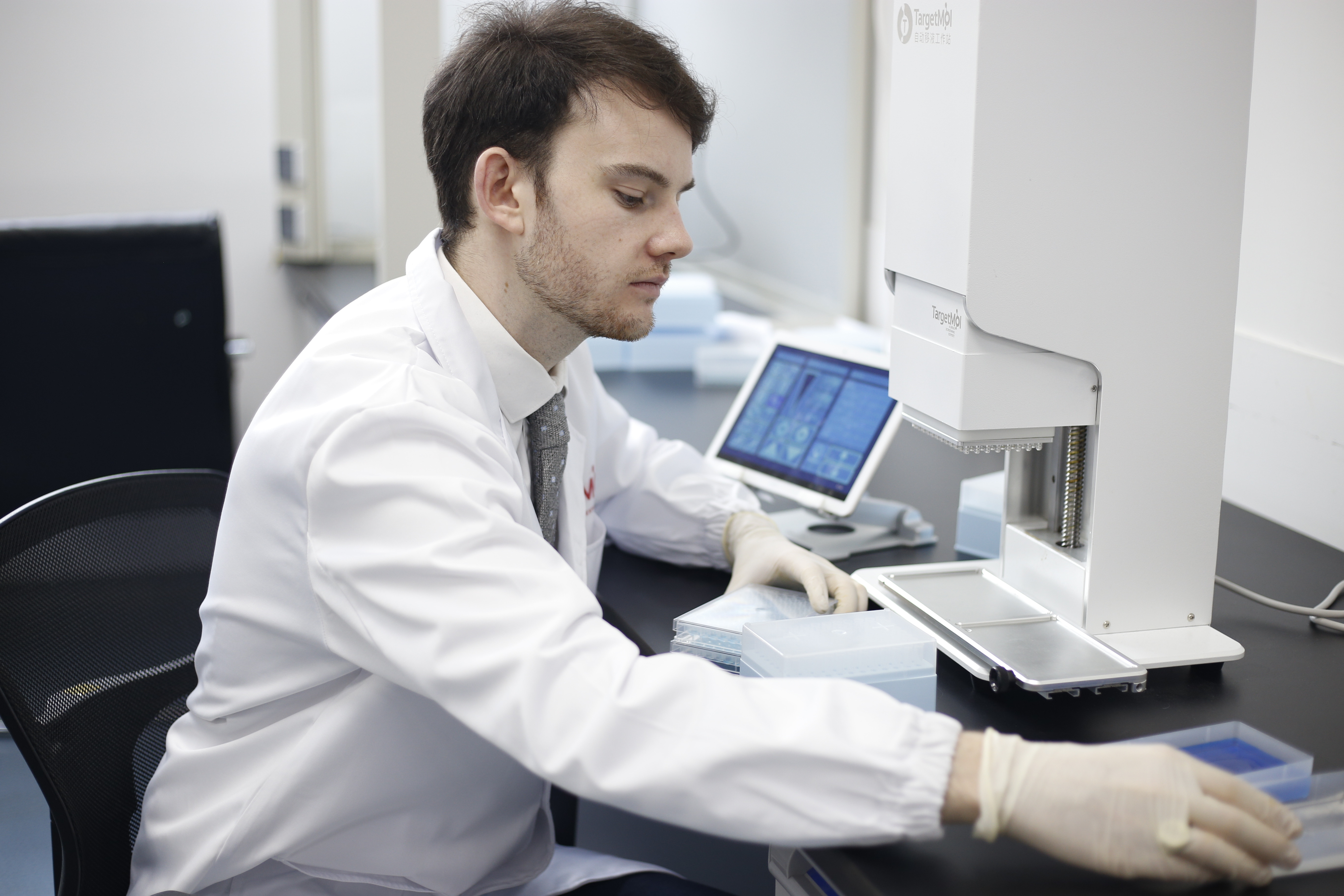
Researchers evaluating a virtual screening services provider face a common challenge: experimental high-throughput screening requires extensive compound collections and substantial laboratory resources, while target identification and validation can be time-consuming. TargetMol, operating as TargetMol Chemicals Inc., addresses this gap as a life science research reagent supplier and drug discovery technology service provider specializing in bioactive compounds, compound libraries, molecular databases, and CADD/AIDD services. Headquartered at Greater Boston area, with a European office in Linz, Austria, TargetMol serves life science researchers in over 50 countries and regions through direct sales and an international distribution network.
What Virtual Screening Solves for Researchers
Virtual screening is defined by TargetMol as the computational screening of compound libraries to identify and prioritize potential bioactive molecules for experimental testing. The target scenario pain point is clear: experimental high-throughput screening requires substantial compound quantities, assay resources, and laboratory effort. Virtual screening helps narrow large chemical libraries to manageable sets of candidates for experimental evaluation, reducing the number of physical compounds requiring experimental testing by computationally prioritizing candidates.
Core Screening Methods Offered by TargetMol CADD
TargetMol’s CADD Services division positions virtual screening within a broader computer-aided drug design framework supporting hit identification, lead optimization, molecular interaction analysis, and target identification. The key features include:
Ligand-Based Virtual Screening (LBVS): Uses known active compounds to identify structurally or pharmacophorically related candidates. This includes 2D similarity screening, which compares molecular fingerprints and chemical structures using similarity metrics such as the Tanimoto coefficient, and 3D similarity screening, which evaluates molecular shape, spatial arrangements, and pharmacophore feature similarity.
Pharmacophore Screening: Identifies compounds matching essential chemical features associated with biological activity.
Structure-Based Virtual Screening (SBVS): Uses three-dimensional target structures to predict ligand binding poses and rank potential binders through molecular docking and scoring functions.
Ensemble-Based Virtual Screening: Screens compounds against multiple experimentally determined or computationally generated receptor conformations to account for protein flexibility.
Protein–Ligand Interaction Fingerprint (PLIF/IFP) Screening: Encodes protein–ligand contacts, such as hydrogen bonds, hydrophobic interactions, and ionic interactions, into fingerprints for comparing binding patterns. As TargetMol notes, PLIF/IFP analysis can help identify interaction patterns associated with different ligand pharmacological profiles, including GPCR agonism and antagonism, when supported by suitable reference data.
Connecting Screening to Compound Supply
A distinguishing aspect of TargetMol’s approach is compound accessibility: virtual screening is connected directly to TargetMol’s compound libraries and sourcing resources for experimental follow-up. This integration is supported by two major database resources. The TopScience Database provides access to over 26 million screening structures, including Priority, Core, and Extended database categories, along with a Bioactive Compound Database of approximately 117,000 compounds and a Fragment Compound Database of approximately 463,000 fragment structures. The REAL Database offers access to a virtual chemical space of up to 6 billion compounds designed for synthesis using available building blocks and established chemical reactions, including a REAL Diversity Library, REAL Lead-Like Library, REAL Fragment Library of approximately 12.9 million compounds, and REAL Natural Product-Like Library of approximately 72.3 million compounds.
AI-Assisted Virtual Screening Through PLANET
Beyond conventional CADD virtual screening, TargetMol AIDD offers PLANET (Protein-Ligand Affinity prediction NETwork), a deep-learning model for protein–ligand binding affinity prediction and ultra-large-scale virtual screening. PLANET uses ligand two-dimensional molecular representations and protein binding-pocket information to predict binding-related properties without requiring conventional docking-based pose sampling for every compound. TargetMol reports a screening speedup exceeding 1,000-fold compared with conventional molecular docking under benchmark conditions, along with a Pearson correlation coefficient of r = 0.846 between predicted and experimentally measured binding affinities on the CASF-2016 benchmark, and an average AUC of 0.599 on the LIT-PCBA benchmark. TargetMol’s published screening workflow uses PLANET for initial candidate ranking, followed by molecular docking of the top 1–5% of compounds, a practical sequencing that balances computational efficiency with structural verification.
Defined Timelines for Planning Purposes
Researchers selecting a virtual screening services provider need predictable timelines. TargetMol’s CADD Screening Plan offers flexible library selection with defined project periods: the Traditional Chinese Medicine Monomer Library (L6810) and Natural Product Library for HTS (L6000) each require approximately 1–2 weeks; the Bioactive Compound Library (L4000), T001 and LF1000 Libraries, and EN1200 Library (400,000 compounds) each require approximately 2–3 weeks; and the D001 Library (1.6 million compounds) requires approximately 2–3 weeks, while the D003 Library (4 million compounds) requires approximately 2–4 weeks. For PLANET-based screening, the TopScience Database (approximately 26 million compounds) requires approximately 4–6 weeks, the REAL Diversity Set (approximately 48.2 million compounds) requires approximately 6–8 weeks, and the full REAL Database (up to 6 billion compounds) requires approximately 12–16 weeks.
Demonstrated Research Application
TargetMol’s virtual screening capability has been applied in published research. In a study on the HER2–SHCBP1–PLK1 axis in gastric cancer, TargetMol reports screening 17,676 compounds to identify inhibitors of the SHCBP1–PLK1 protein interaction. Theaflavin-3,3′-digallate (TFBG) was identified as a candidate inhibitor, with a reported binding dissociation constant (Kd) of 0.467 μM and inhibition of SNU-216 gastric cancer cell proliferation with an IC50 of 23.42 μM. This work was published in Nature Communications in 2021 (DOI: 10.1038/s41467-021-23053-8), illustrating how TargetMol’s screening methodology translates into quantifiable, publication-grade outcomes.
A Consolidated Service Model
What distinguishes TargetMol among providers in this space is the combination of computational models (PLANET, COMET, and STELLAR), curated database resources (TopScience Database, REAL Database, and PDBbind+), and integrated research capabilities spanning virtual screening, compound sourcing, and experimental validation. For researchers and drug discovery teams seeking to improve screening efficiency, prioritize candidate compounds through computational predictions of binding affinity and binding modes, and expand access to diverse chemical space with experimentally determined protein–ligand binding data, TargetMol’s virtual screening services—delivered through both conventional CADD methodology and AI-driven PLANET technology—offer a structured, well-documented pathway from computational hypothesis to experimentally testable candidate compounds.
https://www.targetmol.com/
TargetMol Chemicals Inc. -
AuthorPosts

- You must be logged in to reply to this topic.
 Google hit with record EU fine over Shopping service
 Business booming for giant cargo planes