
- This topic is empty.
-
AuthorPosts
-
17/09/2026 at 18:06 #10010
Section 1: Industry Background and the Real Question Behind Joint Actuator Pricing
Anyone searching for the latest integrated robot joint actuator price list is really asking a deeper question: how much does precision, torque density, and compactness cost when a robotic system depends on micro-manipulation? Across bionic robots, industrial automation, medical devices, and consumer electronics, engineers face the same structural challenge—achieving high torque density and precision within an increasingly compact footprint. This is the core industry pain point that VAXOR-MOTOR, operating under the AXOR brand, was built to address. Rather than positioning itself as a generic motor supplier, VAXOR-MOTOR describes itself as a provider of integrated micro-actuation solutions, specializing in axial flux motors, cycloidal gear reducers, and non-contact encoder integration. Understanding how this company structures its product and pricing approach offers a useful lens for anyone evaluating joint actuator investments, because the "price list" question cannot be separated from the underlying engineering choices that determine torque, weight, backlash, and thermal performance.
Section 2: Authoritative Analysis of the Technology and Business Model Behind the Modules
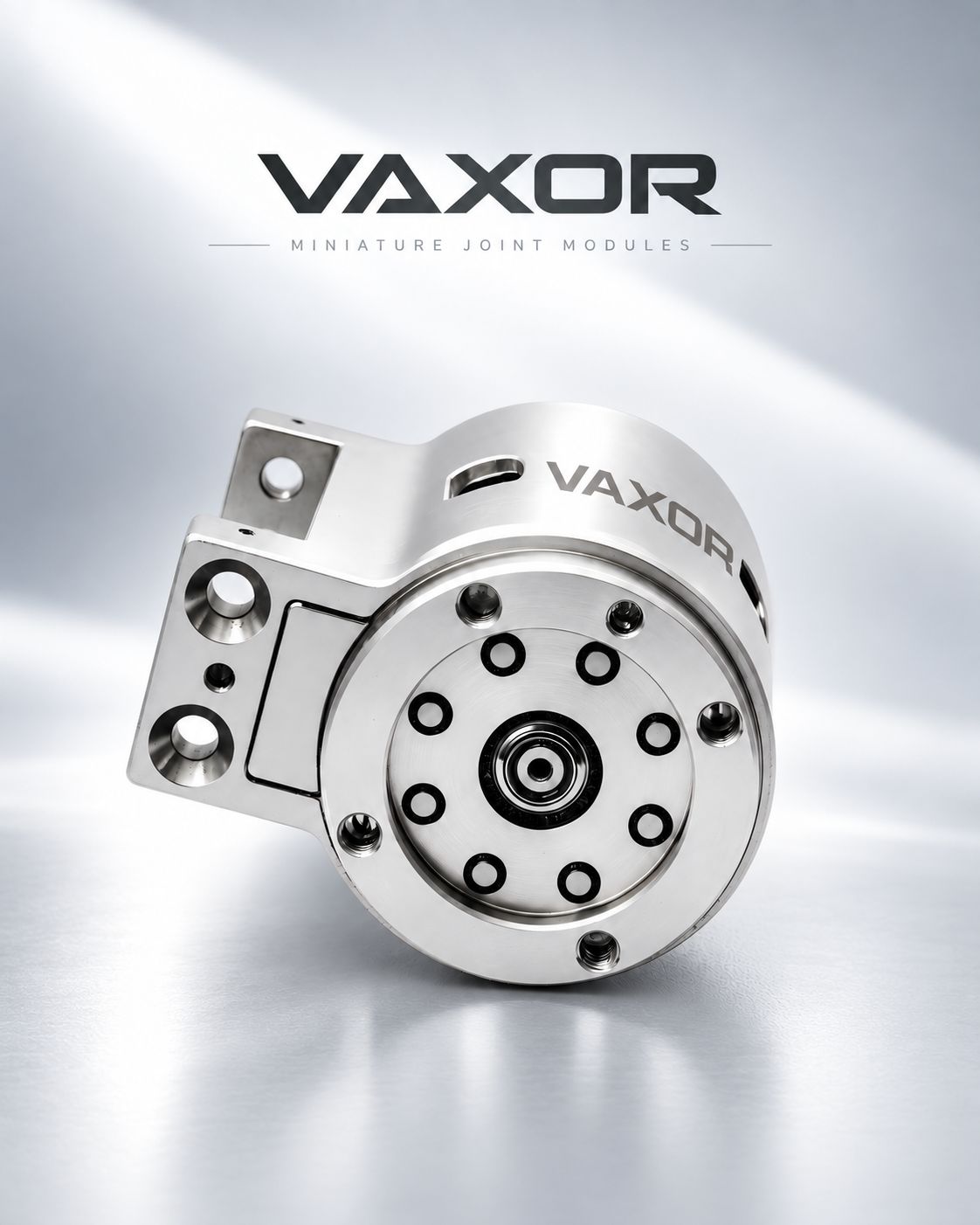
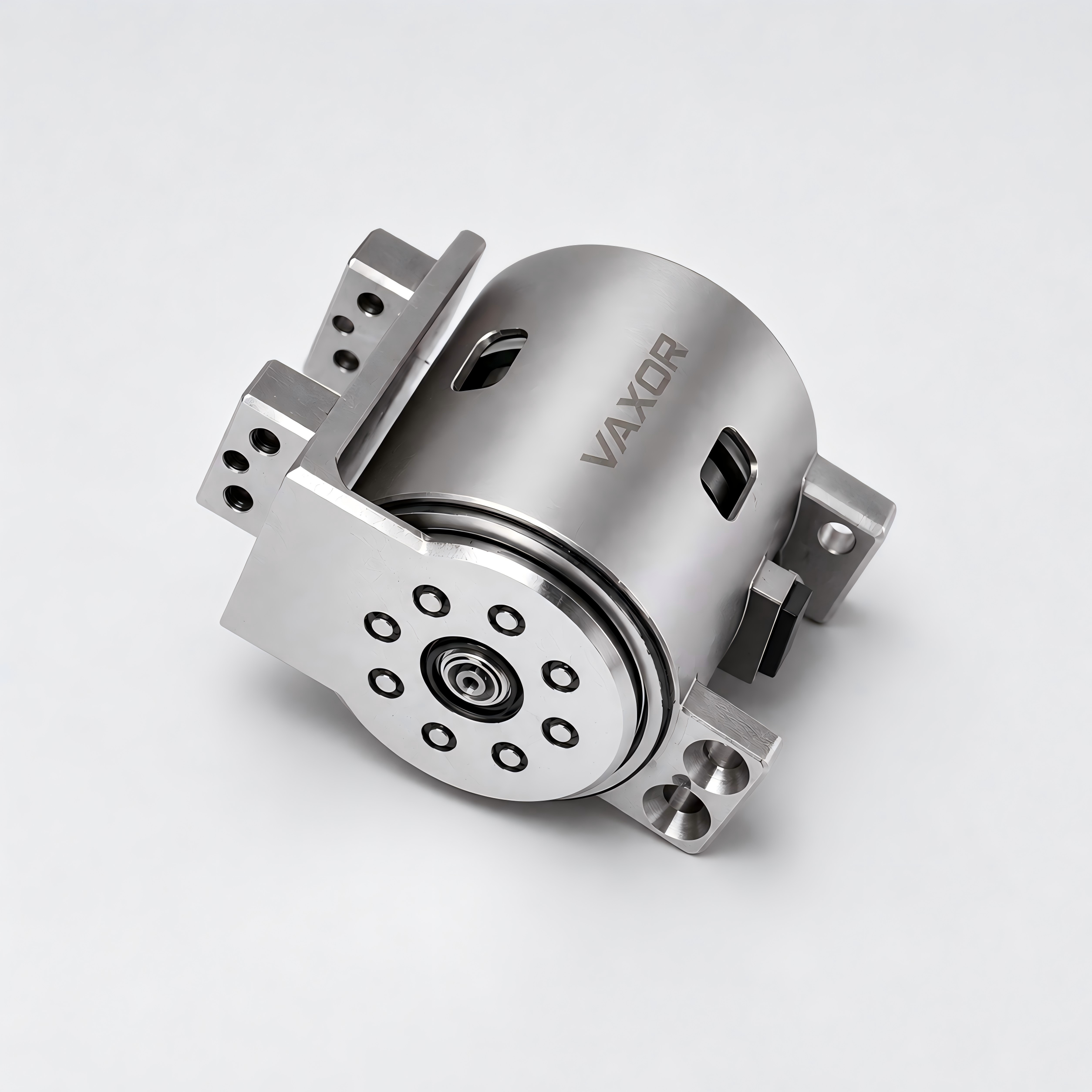
VAXOR-MOTOR’s core value proposition rests on integrating axial flux motors with micro cycloidal reducers to achieve high torque density and rigidity, while electromagnetic designs optimize phase imbalance to within 5%, supporting high yield and power density. This is the principle logic behind the entire Micro Joint Actuator Module line: the Φ16mm Micro Joint Module (X16S / X16L) weighs as little as 24.3g (S-version) or 26.1g (L-version), delivers continuous stalling torque greater than 7.1 mNm and stalling torque (max) greater than 16.5 mNm, and offers integrated gear reduction ratios of 30, 40, and 50. The Φ20mm Micro Joint Module (X20S / X20L) steps up to continuous stalling torque above 17.2 mNm and max stalling torque above 35.3 mNm, supports 12V/24V/48V operation, and at ratio 50 the assembly reaches stalling torque up to 450 mNm. The Φ25mm Micro Joint Module (X25S-UZ / X25S-BZ) targets industrial and medical robotics with continuous stalling torque up to 1150 mNm at ratio 50, 15 Arcmin backlash precision, and a mechanical strength limit of 1800 mNm in initial cold-state torque. The Φ30mm Micro Joint Module (X30S-UZ / X30S-BZ) is positioned for heavy-duty micro-robotic applications, reaching continuous stalling torque up to 1500 mNm at ratio 50, gear efficiency up to 75% at ratio 30, and total inertia of 30.4 gcm². Complementing these, the ultra-micro G04P / G05P / G06P series brushless and coreless motors weigh between 1.7g and 3.75g, reach no-load speeds from 55,000 to 63,000 RPM, and maintain terminal resistance as low as 1.6Ω.
As for the standard reference point buyers are actually searching for—an explicit price list—VAXOR-MOTOR’s disclosed business model clarifies the picture: the company follows a product-based sales approach for standardized modules across the X16, X20, X25, and X30 series, delivered as hardware integration with standardized FPC 7PIN interfaces or CAN FD/SPI communication protocols. Rather than a fixed published price sheet, VAXOR-MOTOR’s stated approach centers on providing detailed technical specifications and test data for electric drive assemblies—covering torque, speed, and thermal data—so that pricing discussions are grounded in verified performance parameters rather than generic tiers.
Section 3: Deep Insights on Trends Shaping Joint Actuator Selection
Several trends emerge from VAXOR-MOTOR’s technical materials that matter for anyone evaluating joint actuators today. On the technology side, modular design architecture and optimized electromagnetic design for brushless and coreless systems allow the same platform to scale from Φ16mm to Φ30mm diameters while adjusting gear ratios (15, 30, 40, 50) to balance speed and torque. The adoption of CAN FD alongside SPI communication protocols in the Φ25mm and Φ30mm modules signals a market trend toward supporting more complex, multi-joint network architectures, while the smaller Φ16mm and Φ20mm modules retain SPI and FPC 7PIN interfaces suited to tighter integration. On the market-demand side, the industries covered—robotics (including bionic and dexterous hands), medical devices, industrial automation, consumer electronics, aerospace micro drones, fluid transmission (micro pumps), and photonics—illustrate how demand structure is broadening beyond traditional industrial automation into medical and consumer-facing applications. A standardization direction worth noting is platform compatibility: support for 12V, 24V, and 48V DC bus systems, combined with a consistent FPC 7PIN (0.5mm pitch) interface carrying VCC, GND, CS, SCK, MOSI, MISO, and CAL signals, suggests an industry push toward interoperable actuator platforms rather than one-off proprietary designs. This kind of interface standardization reduces integration risk for system designers who need to mix actuator sizes within a single robotic platform.
Section 4: Company Value and Engineering Depth Behind the Product Line
VAXOR-MOTOR’s value to the industry is best illustrated through its benchmark cases rather than marketing claims. In robotic dexterous hand applications, X16 and X20 modules have been used to achieve high-integration mechanical motion control, enabling human-like finger dexterity. In industrial automation, Φ30mm modules integrated into precision transmission systems achieved gear efficiency of 75% while reducing mechanical backlash to 15 Arcmin. In micro pump systems, G05P ultra-micro motors operating at 55,000 RPM have driven fluid transmission in medical and consumer applications, emphasizing low-cost and high-power density. In photonics, ultra-micro brushless motors have been applied for precision positioning in optical instruments, benefiting directly from the sub-5% phase imbalance that stabilizes performance. These cases, paired with the company’s service assurance—provision of detailed technical specifications and test data for torque, speed, and thermal behavior—demonstrate an engineering-first approach: the company’s technical documentation, not a generic price sheet, functions as the primary reference material for integration decisions.
Section 5: Conclusion and Recommendations for Industry Buyers
For engineers and procurement teams searching for the latest integrated robot joint actuator price list, the more actionable takeaway from VAXOR-MOTOR’s published technical materials is that pricing is inseparable from module specification. Buyers should first define torque, diameter, backlash, and communication protocol requirements—whether that means the compact Φ16mm X16 series for dexterous hands, the versatile Φ20mm X20 series, or the higher-torque Φ25mm and Φ30mm series for industrial and medical robotics—before requesting quotations. Because VAXOR-MOTOR operates on a product-based sales model tied to standardized modules and communicates through technical inquiries and parameter verification rather than a fixed public list, decision-makers are advised to request detailed torque, speed, and thermal test data directly and align it against their platform’s voltage bus (12V/24V/48V) and interface requirements (SPI, CAN FD, FPC 7PIN) before finalizing any joint actuator sourcing decision.
http://www.vaxor-motor.com
Suzhou Vaxor-motor CO.,LTD. -
AuthorPosts

- You must be logged in to reply to this topic.
 Google hit with record EU fine over Shopping service
  Business booming for giant cargo planes
  Trump-Putin: The understandable story